
Well & Septic Maintenance: The Complete Homeowner's Guide
Home Maintenance
This comprehensive guide provides authoritative maintenance best practices for residential well and septic systems in the United States and Canada. It covers essential information on well systems, septic systems, water heating systems, geothermal systems, and water quality testing protocols. Homeowners will learn detailed maintenance schedules, DIY procedures, warning signs requiring professional attention, and cost-saving strategies. With proper maintenance, homeowners can ensure safe drinking water, effective waste management, and significant cost savings over emergency repairs.
The Takeaway
  1. 15% of the U.S. population relies on private wells that aren't federally regulated, making proper maintenance the homeowner's responsibility
  2. Regular septic pumping ($250-$500 every 3-5 years) prevents costly emergency repairs ($5,000-$15,000)
  3. Annual well water testing is essential, with more frequent testing needed after environmental events or for vulnerable populations
  4. Well systems require monthly visual inspections and annual professional servicing to ensure 20+ year lifespan
  5. Septic systems need inspection every 3 years and pumping every 3-5 years depending on household size
  6. Water heaters need annual maintenance: tank systems require flushing, tankless systems need descaling every 6-12 months
  7. Geothermal systems offer exceptional efficiency with ground loops lasting 50+ years when properly maintained
  8. Comprehensive documentation of all maintenance is crucial for tracking system performance and planning future maintenance
  9. Regional factors significantly impact maintenance needs: coastal areas face saltwater intrusion while cold climates require freeze protection
  10. Proper financial planning should include monthly savings of $50-100 for septic systems and $15-30 for well systems

May 2, 2025 1:04 PM
32 minute read
Print
Homestead Harmony
Homestead Harmony
Underground Heroes: Mastering Your Well & Septic Systems
0:00
 
11:14

Overview

This comprehensive guide provides authoritative best practices for maintaining residential well and septic systems in the United States and Canada. Approximately 15% of the U.S. population (over 43 million people) rely on private wells for drinking water, and these homeowners are solely responsible for ensuring their water quality and system maintenance.  [1] Centers for Disease Control and Prevention (CDC) July 1, 2024 Guidelines for Testing Well Water Test your well water at least once every year for total coliform bacteria, nitrates, total dissolved solids, and pH level. government health agency   [2] National Ground Water Association (NGWA) Homeowner's Maintenance Checklist - Wellowner.org An annual well maintenance check, including a bacterial test, is recommended. Drinking water should be checked any time there is a change in taste, odor or ... educational resource Unlike municipal water systems, private wells and septic systems are not regulated by the federal government under the Safe Drinking Water Act, placing the burden of proper maintenance entirely on homeowners.  [1] Centers for Disease Control and Prevention (CDC) July 1, 2024 Guidelines for Testing Well Water Test your well water at least once every year for total coliform bacteria, nitrates, total dissolved solids, and pH level. government health agency   [3] US Environmental Protection Agency (EPA) September 17, 2024 How to Care for Your Septic System How to Care for Your Septic System · Inspect and Pump Frequently · Use Water Efficiently · Properly Dispose of Waste · Maintain Your Drainfield. Government Resource

The guide covers five key residential systems: well systems, septic systems, water heating systems, geothermal systems, and water quality testing protocols. For each system, we provide detailed maintenance schedules, DIY procedures, evaluation criteria, warning signs, verification methods, and monitoring recommendations. Special attention is given to seasonal considerations, particularly for Spring 2025.

Proper maintenance is not only crucial for ensuring safe drinking water and effective waste management but also represents significant cost savings over time. Regular septic system maintenance ($250-$500 every 3-5 years) is dramatically cheaper than emergency repairs ($5,000-$15,000).  [6] Ray's Twilight Septic Service Find Out When to Pump Your Septic Tank with Our Calculator. Use our Septic Tank Pumping Frequency Calculator to determine the best time for your septic maintenance. Quick, easy, and accurate. service website Similarly, preventative well maintenance ($150-$350 annually) can prevent costly pump repairs that may reach thousands of dollars.  [13] JT Services DIY vs. Professional Septic System Repairs This complete guide will walk you through the decision making process of DIY vs professional septic system repairs. blog

This guide aims to empower homeowners with the knowledge to properly maintain these critical home systems, recognize when professional intervention is needed, and protect both their investment and their family's health.

Residential Well Systems

Key Points

Well systems require regular maintenance to ensure safe drinking water and system longevity. Annual inspections and water testing are essential, with specific attention to well heads, pumps, storage tanks, and filtration systems. Professional servicing is recommended for complex components, while homeowners can perform visual inspections and basic maintenance tasks. Well systems typically have a serviceable life of 20+ years with proper care.

Well Head Maintenance
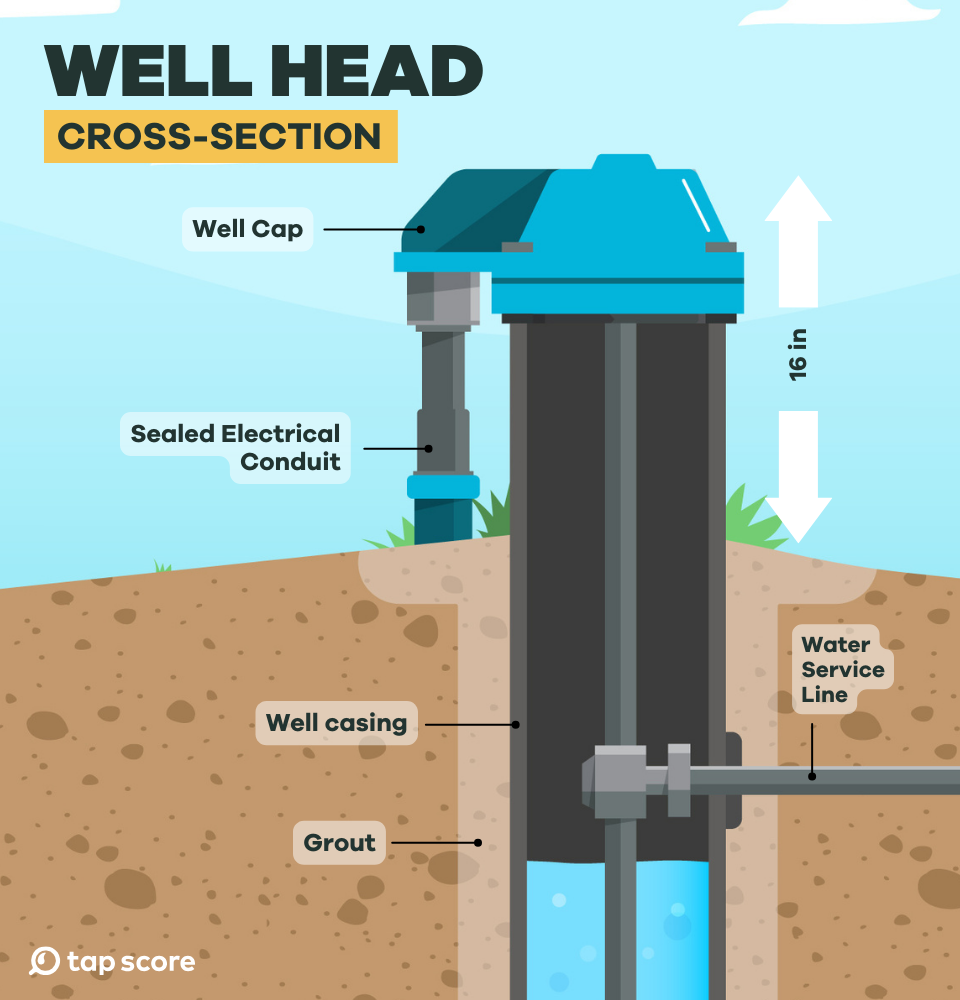
Cross-section diagram of a well head showing labeled components including the well cap, sealed electrical conduit, well casing, grout, and water service line, with an indicated depth of 16 inches.
Cross-section diagram of a properly constructed well head.

The well head is the visible portion of your well system above ground and serves as the primary protection point against contaminants entering your water supply. Proper maintenance of this component is critical for water safety.

Inspection Schedule

  • Homeowner inspections: Monthly visual checks for damage, cracks, or signs of tampering.  [4] US Environmental Protection Agency (EPA) March 24, 2025 Why Maintain Your Septic System | US EPA In general, a septic tank should be inspected every 1 to 3 years and pumped every 3 to 5 years. · Spring is a great time to service your septic ... Government Agency
  • Professional inspections: Annually, as part of your complete well system evaluation.  [4] US Environmental Protection Agency (EPA) March 24, 2025 Why Maintain Your Septic System | US EPA In general, a septic tank should be inspected every 1 to 3 years and pumped every 3 to 5 years. · Spring is a great time to service your septic ... Government Agency   [13] JT Services DIY vs. Professional Septic System Repairs This complete guide will walk you through the decision making process of DIY vs professional septic system repairs. blog

DIY Maintenance Procedures

  1. Visual inspection: Examine the well cap and casing for cracks, corrosion, or damage.  [11] ONIT Home November 30, 2022 How to Create a Schedule for Well Water Maintenance A schedule should involve a plan for maintaining the well system, including the water quality, wellhead, water treatment devices, and septic system. blog
    • Do not open the well cap yourself, as this could introduce contaminants.  [11] ONIT Home November 30, 2022 How to Create a Schedule for Well Water Maintenance A schedule should involve a plan for maintaining the well system, including the water quality, wellhead, water treatment devices, and septic system. blog
    • Check that the well cap is securely attached and locked if applicable.
    • Ensure the well casing extends at least 12 inches above ground level.
  2. Area maintenance:
    • Clear vegetation and debris within a 2-foot radius around the well head.  [9] Hague Quality Water of Maryland Seasonal Well Testing and Treatment Tips Comprehensive guide to well water testing and maintenance for homeowners blog
    • Ensure proper drainage by sloping the ground away from the well to prevent standing water.  [9] Hague Quality Water of Maryland Seasonal Well Testing and Treatment Tips Comprehensive guide to well water testing and maintenance for homeowners blog
    • Maintain a "clean zone" around your well head, keeping it free from pesticides, fertilizers, pet waste, stored chemicals, vehicles and heavy equipment.  [2] National Ground Water Association (NGWA) Homeowner's Maintenance Checklist - Wellowner.org An annual well maintenance check, including a bacterial test, is recommended. Drinking water should be checked any time there is a change in taste, odor or ... educational resource   [11] ONIT Home November 30, 2022 How to Create a Schedule for Well Water Maintenance A schedule should involve a plan for maintaining the well system, including the water quality, wellhead, water treatment devices, and septic system. blog

Safe Distance Requirements

Ensure your well maintains these minimum safe distances from potential contamination sources:

  • 50 feet from septic tanks
  • 50 feet from septic leach fields
  • 50 feet from livestock yards
  • 100 feet from petroleum tanks
  • 100 feet from liquid-tight manure storage
  • 100 feet from fertilizer storage/handling areas
  • 250 feet from manure stacks  [2] National Ground Water Association (NGWA) Homeowner's Maintenance Checklist - Wellowner.org An annual well maintenance check, including a bacterial test, is recommended. Drinking water should be checked any time there is a change in taste, odor or ... educational resource

Maintaining proper separation between your well and potential contamination sources is essential for long-term water safety and quality.

Warning Signs Requiring Professional Attention

  • Visible cracks or damage to the well cap or casing
  • Standing water around the well head
  • Unusual odors or tastes in water
  • Insects or small animals near the well opening
  • Unexplained changes in water pressure or flow  [11] ONIT Home November 30, 2022 How to Create a Schedule for Well Water Maintenance A schedule should involve a plan for maintaining the well system, including the water quality, wellhead, water treatment devices, and septic system. blog   [2] National Ground Water Association (NGWA) Homeowner's Maintenance Checklist - Wellowner.org An annual well maintenance check, including a bacterial test, is recommended. Drinking water should be checked any time there is a change in taste, odor or ... educational resource

Verification Methods
After maintenance, verify proper well head condition by confirming the cap is secure and undamaged, ensuring proper drainage around the well, and checking that no potential contaminants are stored nearby.  [9] Hague Quality Water of Maryland Seasonal Well Testing and Treatment Tips Comprehensive guide to well water testing and maintenance for homeowners blog

Well Pump Maintenance

Well pumps are the heart of your water system, drawing water from underground and delivering it to your home. Proper maintenance ensures reliable operation and extends the pump's lifespan.

Types of Well Pumps

  1. Submersible pumps: Located inside the well, submerged in water
  2. Jet pumps: Located above ground, drawing water through suction
  3. Hand pumps: Manual operation, typically used as backup systems

Maintenance Schedule

  • Homeowner maintenance: Monthly monitoring of water pressure and flow.  [13] JT Services DIY vs. Professional Septic System Repairs This complete guide will walk you through the decision making process of DIY vs professional septic system repairs. blog
  • Professional maintenance: Annual inspection and servicing as part of complete well system evaluation.  [4] US Environmental Protection Agency (EPA) March 24, 2025 Why Maintain Your Septic System | US EPA In general, a septic tank should be inspected every 1 to 3 years and pumped every 3 to 5 years. · Spring is a great time to service your septic ... Government Agency
  • Lifespan expectations: Well pumps typically last 8-15 years with proper maintenance.  [13] JT Services DIY vs. Professional Septic System Repairs This complete guide will walk you through the decision making process of DIY vs professional septic system repairs. blog

DIY Monitoring Procedures

  1. Pressure monitoring:
    • Check water pressure regularly using a pressure gauge at an outdoor spigot.
    • Note any significant changes in pressure (±10 psi from normal).
    • Listen for unusual cycling or running of the pump.
  2. Performance monitoring:
    • Track how long the pump runs to refill the pressure tank after water use.
    • Note any changes in water flow rate from faucets.
    • Document unusual noises during pump operation.

Water Storage and Pressure Systems

Residential well systems typically include pressure tanks and sometimes additional storage tanks to maintain consistent water pressure and supply. These components require regular maintenance to function properly.

Pressure Tank Maintenance Schedule

  • Homeowner inspection: Monthly visual checks for leaks or corrosion.  [20] PVC Fittings Online October 9, 2024 Signs Your Well Pressure Tank is Going Bad There are a number of signs indicating pressure tank problems, including reduced water pressure, dirty water, constant pressure switch cycling, high energy ... blog
  • Professional inspection: Annually, as part of complete well system evaluation.  [20] PVC Fittings Online October 9, 2024 Signs Your Well Pressure Tank is Going Bad There are a number of signs indicating pressure tank problems, including reduced water pressure, dirty water, constant pressure switch cycling, high energy ... blog
  • Lifespan expectations: 5-15 years, depending on water quality and maintenance.  [23] SimpleLab Tap Score Well Water Test Kits | Certified Lab Analysis – SimpleLab Tap Score Recommended kit for well water with expanded testing and overnight shipping to lab for high precision accuracy. Advanced Water Test Kit for Private Wells. commercial water testing service

DIY Maintenance Procedures

  1. Visual inspection:
    • Check for external rust, dents, or water around the tank base.  [20] PVC Fittings Online October 9, 2024 Signs Your Well Pressure Tank is Going Bad There are a number of signs indicating pressure tank problems, including reduced water pressure, dirty water, constant pressure switch cycling, high energy ... blog
    • Ensure proper mounting and support of the tank.
  2. Air pressure checking:
    • Turn off power to the pump.
    • Drain all water pressure from the system by opening a faucet.
    • Use a tire pressure gauge on the air valve at the top of the tank.
    • The pressure should be 2 PSI below the pump's cut-in pressure (typically 28 PSI for a 30/50 pressure switch).  [23] SimpleLab Tap Score Well Water Test Kits | Certified Lab Analysis – SimpleLab Tap Score Recommended kit for well water with expanded testing and overnight shipping to lab for high precision accuracy. Advanced Water Test Kit for Private Wells. commercial water testing service
    • Add air with a bicycle pump or compressor if needed.
  3. Sediment drainage (every 6-12 months):
    • Turn off power to the pump.
    • Connect a garden hose to the drain valve at the bottom of the tank.
    • Open the valve and drain several gallons of water to flush out sediment.  [21] Wragg Brothers Well Drilling December 30, 2024 How Long Does a Well Pressure Tank Last? Key signs that a well pressure tank needs replacement include water pressure fluctuations, unusual noises, and visible leaks. Professional Services Blog
    • Close the valve and restore power to the pump.

Water Treatment and Filtration Systems

Many residential well systems include water treatment components to address specific water quality issues. These systems require regular maintenance to function effectively.

Common Treatment Systems

  1. Sediment filters: Remove particles and debris
  2. Carbon filters: Reduce chlorine, organic compounds, and some contaminants
  3. Water softeners: Remove hardness minerals (calcium and magnesium)
  4. Reverse osmosis systems: Remove dissolved contaminants and impurities
  5. UV disinfection: Kills bacteria and other microorganisms
  6. Chemical injection systems: Add chlorine, peroxide, or other treatments

Maintenance Schedule by System Type
Regular maintenance of filtration systems is essential, with sediment filters requiring replacement every 3-6 months, carbon filters every 6-12 months, water softeners needing salt additions monthly, and UV lamps requiring annual replacement even if still functioning.

DIY Maintenance Procedures

Sediment Filter Replacement

  1. Shut off water supply to the filter.
  2. Relieve pressure by opening a nearby faucet.
  3. Place a bucket under the filter housing.
  4. Use a filter wrench to remove the housing.
  5. Remove and discard the old filter.
  6. Clean the housing with mild soap and water.
  7. Insert the new filter, ensuring proper orientation.
  8. Lubricate the O-ring with food-grade silicone grease.
  9. Reattach the housing and hand-tighten.
  10. Slowly turn on the water supply and check for leaks.

Residential Septic Systems

Key Points

Septic systems require regular inspection and pumping every 3-5 years, with more frequent maintenance for systems with mechanical components. Proper waste disposal, water conservation, and drainfield protection are essential for system longevity. Warning signs like slow drains, odors, and wet spots require immediate professional attention. Regular maintenance costs ($250-$500) are significantly less than emergency repairs ($5,000-$15,000). With proper care, concrete septic tanks can last 50+ years, while pumps typically need replacement every 10-20 years.

Main Septic System Maintenance

Frozen septic system pipes can lead to serious system damage.

The septic system is your home's personal wastewater treatment facility, processing all water that goes down your drains. Proper maintenance is essential for environmental protection, property value preservation, and avoiding costly repairs.

Components of a Septic System

  1. Septic tank: Collects wastewater and separates solids (sludge) from liquids (effluent)
  2. Drainfield: Area where effluent is naturally filtered through soil before reentering the environment
  3. Distribution box: Directs effluent from the tank to the drainfield
  4. Pipes: Connect components and transport wastewater

Inspection and Pumping Schedule

  • Professional inspection: Every 3 years for conventional systems; annually for systems with electrical components, pumps, or mechanical parts.  [5] Call the Plumbing Doctor April 2025 Preparing Your Septic System for Spring: Essential Maintenance Tips Comprehensive guide to septic system maintenance for spring, covering inspection, pumping, and preventative care blog   [6] Ray's Twilight Septic Service Find Out When to Pump Your Septic Tank with Our Calculator. Use our Septic Tank Pumping Frequency Calculator to determine the best time for your septic maintenance. Quick, easy, and accurate. service website
  • Tank pumping: Typically every 3-5 years, but frequency depends on tank size, number of household occupants, volume of wastewater generated, and amount of solids in wastewater.  [6] Ray's Twilight Septic Service Find Out When to Pump Your Septic Tank with Our Calculator. Use our Septic Tank Pumping Frequency Calculator to determine the best time for your septic maintenance. Quick, easy, and accurate. service website   [7] US Environmental Protection Agency (EPA) October 9, 2024 Protect Your Home's Water Test your private well annually for total coliform bacteria, nitrates, total dissolved solids, and pH levels. Government Resource
Household Size Tank Size (gallons) Average Pumping Frequency
1-2 people 1,000 5-6 years
3-4 people 1,000 3-4 years
5+ people 1,000 2-3 years
1-2 people 1,500 7-8 years
3-4 people 1,500 4-5 years
5+ people 1,500 2-3 years

Homeowner Maintenance Practices

Water Conservation

Proper Waste Disposal

  • Flush only human waste and toilet paper.  [5] Call the Plumbing Doctor April 2025 Preparing Your Septic System for Spring: Essential Maintenance Tips Comprehensive guide to septic system maintenance for spring, covering inspection, pumping, and preventative care blog
  • Never flush: wipes (even "flushable" ones), feminine hygiene products, dental floss, diapers, cigarette butts, coffee grounds, cat litter, paper towels, pharmaceuticals, or household chemicals.  [5] Call the Plumbing Doctor April 2025 Preparing Your Septic System for Spring: Essential Maintenance Tips Comprehensive guide to septic system maintenance for spring, covering inspection, pumping, and preventative care blog
  • Avoid or limit garbage disposal use, as it increases solids in the septic tank.
  • Never pour fats, oils, or grease down drains.
  • Dispose of household hazardous wastes at designated collection facilities, not down drains.  [5] Call the Plumbing Doctor April 2025 Preparing Your Septic System for Spring: Essential Maintenance Tips Comprehensive guide to septic system maintenance for spring, covering inspection, pumping, and preventative care blog

Drainfield Protection

  • Never park or drive vehicles on the drainfield.  [5] Call the Plumbing Doctor April 2025 Preparing Your Septic System for Spring: Essential Maintenance Tips Comprehensive guide to septic system maintenance for spring, covering inspection, pumping, and preventative care blog
  • Avoid planting trees or shrubs near the drainfield, as roots can damage pipes.
  • Direct roof drains, sump pumps, and other rainwater drainage systems away from the drainfield area.  [5] Call the Plumbing Doctor April 2025 Preparing Your Septic System for Spring: Essential Maintenance Tips Comprehensive guide to septic system maintenance for spring, covering inspection, pumping, and preventative care blog
  • Maintain grass cover over the drainfield to prevent erosion.
  • Keep sprinkler systems away from the drainfield area.

Warning Signs Requiring Professional Attention

Be alert for these warning signs that indicate your septic system needs professional attention:

  • Slow-draining fixtures throughout the house
  • Gurgling sounds in plumbing
  • Sewage backups in toilets or drains
  • Wet, spongy ground or standing water around the septic tank or drainfield
  • Bright green, spongy grass over the drainfield, especially during dry weather
  • Strong sewage odors around the property
  • High nitrate or bacteria levels in well water tests  [7] US Environmental Protection Agency (EPA) October 9, 2024 Protect Your Home's Water Test your private well annually for total coliform bacteria, nitrates, total dissolved solids, and pH levels. Government Resource   [16] Odor Free Septic 2025 Common Problems in Coastal Areas - Odor Free Septic Septic systems in coastal areas face unique challenges that can compromise their performance and longevity. Factors like high water tables ... specialized blog

The difference between a $200 maintenance visit and a $15,000 emergency repair often comes down to proper preparation and regular maintenance.

Seasonal Maintenance Considerations for Spring 2025

  • Post-winter inspection: Check for any damage from freeze-thaw cycles.  [7] US Environmental Protection Agency (EPA) October 9, 2024 Protect Your Home's Water Test your private well annually for total coliform bacteria, nitrates, total dissolved solids, and pH levels. Government Resource   [38] Drainfield Solutions March 16, 2025 DIY Septic System Maintenance vs. Professional Septic System Services Cost Comparison: DIY vs. Professional Septic Maintenance. Cost is a major factor for homeowners deciding between DIY and professional services. local business blog
  • Drainfield assessment: Look for any areas of standing water that may indicate drainfield issues.  [38] Drainfield Solutions March 16, 2025 DIY Septic System Maintenance vs. Professional Septic System Services Cost Comparison: DIY vs. Professional Septic Maintenance. Cost is a major factor for homeowners deciding between DIY and professional services. local business blog
  • System evaluation: Spring is an ideal time for annual inspection and pumping if needed.  [7] US Environmental Protection Agency (EPA) October 9, 2024 Protect Your Home's Water Test your private well annually for total coliform bacteria, nitrates, total dissolved solids, and pH levels. Government Resource
  • Water usage planning: Be mindful of increased water usage during spring cleaning activities.  [38] Drainfield Solutions March 16, 2025 DIY Septic System Maintenance vs. Professional Septic System Services Cost Comparison: DIY vs. Professional Septic Maintenance. Cost is a major factor for homeowners deciding between DIY and professional services. local business blog

Professional vs. DIY Tasks

Understanding which maintenance tasks you can safely perform yourself and which require professional expertise is crucial for proper septic system care.

Appropriate DIY Tasks:

  • Visual inspections of the yard over the system
  • Monitoring for warning signs
  • Water conservation practices
  • Proper waste disposal habits
  • Recording water usage and maintenance history
  • Protecting access points and maintaining the area above the system  [16] Odor Free Septic 2025 Common Problems in Coastal Areas - Odor Free Septic Septic systems in coastal areas face unique challenges that can compromise their performance and longevity. Factors like high water tables ... specialized blog   [40] Central Penn Septic How Much Does a Septic System Cost? Your Complete 2025 Guide Maintenance is crucial for septic systems, with regular costs between $250 and $500 every three to five years to prevent costly repairs and protect public ... local service business website

Tasks Requiring Professionals:

  • Tank pumping and cleaning
  • System inspections
  • Repairs to any components
  • Baffle inspection and replacement
  • Filter cleaning (in most cases)
  • Any task requiring opening the septic tank (due to toxic gas hazards)  [16] Odor Free Septic 2025 Common Problems in Coastal Areas - Odor Free Septic Septic systems in coastal areas face unique challenges that can compromise their performance and longevity. Factors like high water tables ... specialized blog   [40] Central Penn Septic How Much Does a Septic System Cost? Your Complete 2025 Guide Maintenance is crucial for septic systems, with regular costs between $250 and $500 every three to five years to prevent costly repairs and protect public ... local service business website

Septic Pump Maintenance

Many septic systems include pumps to move effluent from the tank to the drainfield, especially in systems where gravity flow isn't possible. These pumps require specific maintenance to ensure reliable operation.

Types of Septic Pumps

  1. Effluent pumps: Move clarified liquid from the septic tank to the drainfield
  2. Grinder pumps: Break up solids before pumping to the septic tank
  3. Sewage ejector pumps: Lift sewage from below-grade fixtures to the main drain line

Maintenance Schedule

Homeowner Monitoring Procedures

  1. Alarm testing:
    • Locate your pump's alarm panel (typically mounted on an interior wall).
    • Press the "Test" button to verify the alarm functions properly.
    • If no test button exists, consult your system's manual for testing procedures.
  2. Power verification:
    • Ensure the pump's circuit breaker remains on.
    • Check that any disconnect switches are in the proper position.
    • Verify power indicator lights are functioning normally.

Effluent Filtration Maintenance

Effluent filters are devices installed in the outlet of the septic tank to prevent solids from entering the drainfield. These filters are critical for protecting the drainfield from clogging and extending the system's lifespan.

Types of Effluent Filters

  1. Outlet filters: Installed at the tank outlet baffle
  2. In-line filters: Installed in the pipe between the tank and drainfield
  3. Distribution box filters: Installed in the distribution box

Maintenance Schedule

  • Filter inspection: Every 6-12 months.  [7] US Environmental Protection Agency (EPA) October 9, 2024 Protect Your Home's Water Test your private well annually for total coliform bacteria, nitrates, total dissolved solids, and pH levels. Government Resource
  • Filter cleaning: As needed, typically every 6-12 months depending on household habits and system usage.
  • Filter replacement: Every 3-5 years, or as recommended by the manufacturer.

DIY Filter Cleaning Procedure
CAUTION: This procedure should only be attempted if you can access the filter without entering or leaning into the septic tank. Toxic gases in septic tanks can be lethal. If the filter cannot be easily reached from outside the tank, hire a professional.
  [16] Odor Free Septic 2025 Common Problems in Coastal Areas - Odor Free Septic Septic systems in coastal areas face unique challenges that can compromise their performance and longevity. Factors like high water tables ... specialized blog

Preparation:

  • Wear rubber gloves, eye protection, and protective clothing.
  • Have a garden hose ready with running water.
  • Prepare a small tarp or plastic sheet next to the tank.
  • Have a bucket with a small amount of bleach water for tools.

Water Heating Systems

Key Points

Water heating systems require regular maintenance to ensure efficiency, safety, and longevity. Traditional tank systems need annual flushing to remove sediment buildup, while tankless systems require descaling every 6-12 months depending on water hardness. DIY maintenance is possible for many tasks, though professional service is recommended for complex issues or when warranties might be affected. Proper maintenance can significantly extend system lifespan and reduce energy costs, with potential savings of up to 25% on water heating energy consumption.

Traditional Water Heater Maintenance

Traditional tank-style water heaters are common in many homes and require regular maintenance to operate efficiently and extend their lifespan.

Maintenance Schedule

  • Temperature and pressure relief valve testing: Every 6 months
  • Sediment flushing: Annually, or twice yearly in areas with hard water
  • Anode rod inspection: Every 2-3 years
  • Professional inspection: Every 2-3 years
  • Expected lifespan: 8-12 years with proper maintenance

DIY Maintenance Procedures
Regular maintenance of your water heater, including temperature and pressure relief valve testing and annual tank flushing, can significantly extend its lifespan and maintain efficiency.

Temperature and Pressure Relief (TPR) Valve Testing

  1. Place a bucket under the discharge pipe connected to the TPR valve.
  2. Lift the valve's test lever halfway and then release it.
  3. The valve should allow hot water to flow and then stop when the lever is released.
  4. If little or no water flows, or if the valve doesn't properly seal after testing, replacement is needed (call a professional).

Water Heater Flushing Procedure

Annual water heater flushing can remove sediment that reduces efficiency by up to 25% and significantly shortens tank lifespan.

Preparation:

  • Turn off the power to electric heaters or set gas heaters to "pilot."
  • Turn off the cold water supply to the heater.
  • Wait 1-2 hours for the water to cool.

Draining process:

  • Connect a garden hose to the drain valve at the bottom of the tank.
  • Place the other end of the hose in a drain or outdoors.
  • Open a hot water faucet somewhere in the house to prevent vacuum formation.
  • Open the drain valve and allow the tank to empty completely.

Flushing process:

  • With the drain valve still open, turn on the cold water supply for 2-3 minutes to flush out sediment.
  • Close the drain valve, disconnect the hose, and allow the tank to refill.
  • When water flows normally from the previously opened hot water faucet, close it.
  • Restore power to the water heater.

Warning Signs Requiring Professional Attention

  • Water leaking from the tank or connections
  • Rusty or discolored water
  • Unusual noises (popping, cracking, or rumbling)
  • Inconsistent water temperature
  • Significant decrease in hot water volume
  • Visible rust or corrosion on the tank exterior
  • TPR valve that leaks or doesn't function properly

Tankless Water Heater Maintenance

Tankless water heaters provide on-demand hot water without the standby energy losses associated with storage water heaters. However, they require specific maintenance to maintain efficiency and longevity.

Maintenance Schedule

Factors Affecting Maintenance Frequency

Residential Geothermal Systems

Key Points

Geothermal systems offer exceptional efficiency and longevity, with ground loops lasting 50+ years and indoor components typically lasting 24+ years. These systems require annual professional inspections and basic homeowner maintenance like filter changes. The closed-loop systems are generally low-maintenance, while open-loop systems need more attention. Regular maintenance can prevent the 25% efficiency loss that occurs in poorly maintained systems. Geothermal systems can reduce energy bills by up to 65% compared to traditional HVAC systems, making them a valuable long-term investment.

Water-Based Heating/Cooling Maintenance
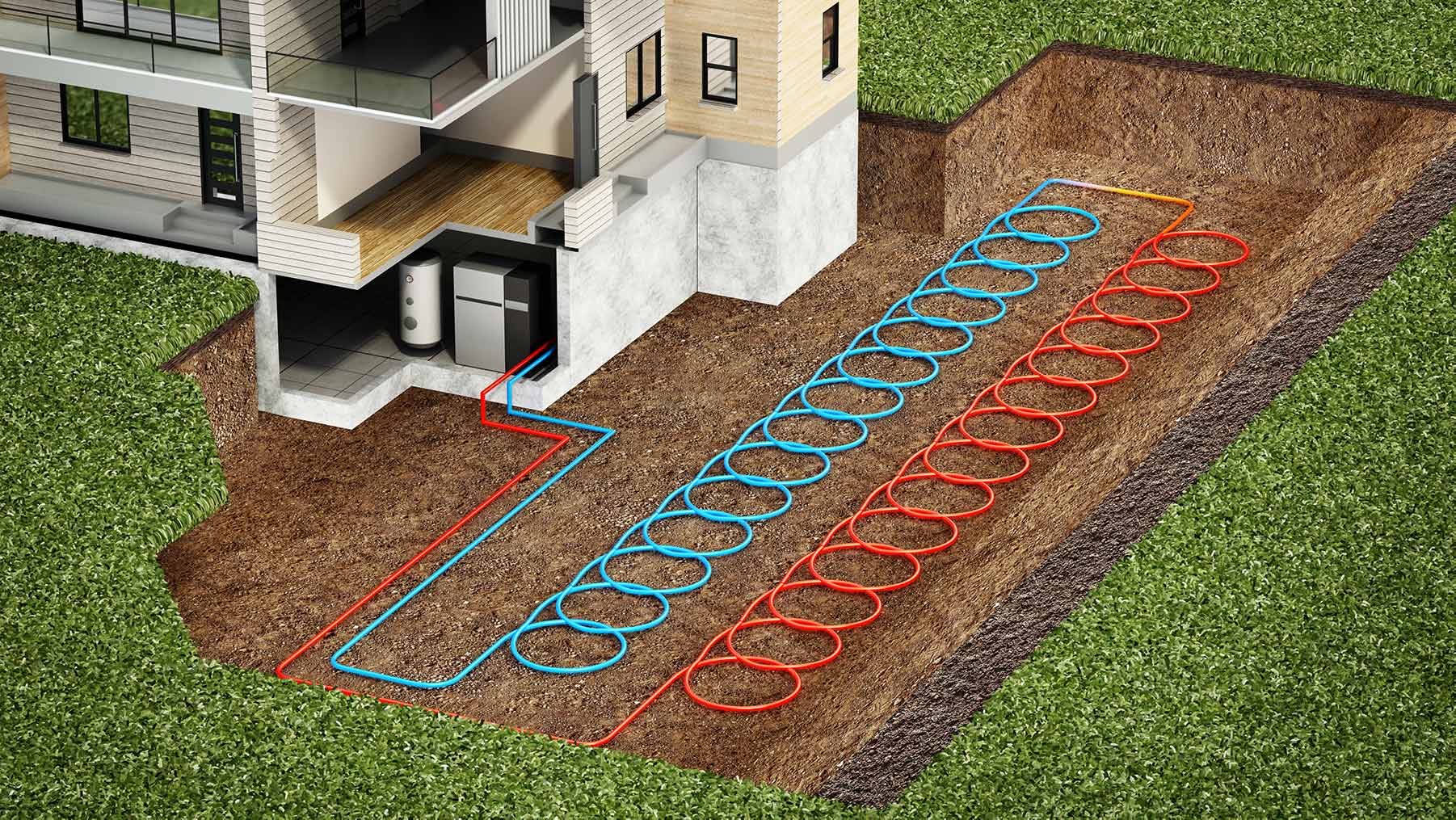
A cross-sectional view of a house with a geothermal heating and cooling system, showing red and blue piping loops buried in the ground connected to the home's interior HVAC unit.
Cross-sectional view of a residential geothermal heating and cooling system.

Geothermal heat pump systems use the constant temperature of the earth to efficiently heat and cool homes. The water-based components require specific maintenance to ensure optimal performance.

System Components

  1. Heat pump unit: The indoor portion that transfers heat between your home and the ground loop
  2. Ground loop: Underground piping system that circulates water or antifreeze solution
  3. Distribution system: Ductwork or radiant floor system that distributes heating/cooling
  4. Controls and thermostats: Regulate system operation

Maintenance Schedule

Homeowner Maintenance Tasks

Air Filter Replacement

  1. Locate the filter compartment on your indoor unit.
  2. Turn off the system at the thermostat.
  3. Remove the old filter, noting the airflow direction indicated on the frame.
  4. Install the new filter with the arrow pointing in the same direction.
  5. Secure the filter compartment and restore system operation.

Monthly System Check

  1. Listen for unusual noises during operation.
  2. Check for consistent airflow from registers.
  3. Monitor system cycling (should not cycle on and off frequently).
  4. Verify thermostat settings and operation.
  5. Inspect visible connections for leaks or corrosion.

Outdoor Component Maintenance

  1. Keep the area around any outdoor components clear of debris.
  2. Ensure proper drainage around ground loop access points.
  3. Protect exposed components from lawn equipment and landscaping activities.
  4. Maintain records of any changes in system performance.

Warning Signs Requiring Professional Attention

  • Unusual noises during operation
  • Inconsistent heating or cooling
  • System short-cycling (turning on and off frequently)
  • Reduced airflow from registers
  • Unexpected increases in energy bills
  • Error codes on the thermostat or control panel
  • Water leaks or moisture around the indoor unit  [31] Superior Mechanical Services 2024 Professional Vs. DIY Tankless Water Heater Maintenance: Which Is Better? Discover the best approach for tankless water heater maintenance. Learn the pros and cons of professional service versus DIY repairs. service blog

Ground Loop System Maintenance

The ground loop is the underground component of a geothermal system that exchanges heat with the earth. While generally low-maintenance, proper care ensures optimal performance and longevity.

Types of Ground Loop Systems

  1. Horizontal closed loop: Pipes laid in trenches 4-6 feet deep
  2. Vertical closed loop: Pipes installed in vertical boreholes 100-400 feet deep
  3. Pond/lake closed loop: Pipes placed in a nearby water body
  4. Open loop: Uses groundwater directly from a well and returns it to the ground

Maintenance Schedule

  • Closed-loop systems: Professional inspection annually.  [29] Scott-Lee Heating Company August 6, 2014 Troubleshooting Checklist Geothermal Systems Geothermal systems need regular maintenance to prevent breakdowns HVAC service blog
  • Open-loop systems: Professional inspection and well maintenance annually; water quality testing semi-annually.  [30] Navien How to Descale Your Tankless Water Heater Navien recommends descaling a tankless water heater at least once a year, but that frequency can vary manufacturer blog
  • Pressure and flow checks: Quarterly by homeowner (if system has accessible gauges).
  • Expected lifespan: 50+ years for properly installed ground loops.  [29] Scott-Lee Heating Company August 6, 2014 Troubleshooting Checklist Geothermal Systems Geothermal systems need regular maintenance to prevent breakdowns HVAC service blog   [30] Navien How to Descale Your Tankless Water Heater Navien recommends descaling a tankless water heater at least once a year, but that frequency can vary manufacturer blog

According to the U.S. Department of Energy, inadequately maintained geothermal systems consume an additional 25 percent of energy compared to well-maintained systems.

Homeowner Monitoring Tasks

Pressure and Flow Monitoring (if accessible)

  1. Locate pressure gauges on the ground loop system.
  2. Record readings during normal operation.
  3. Compare with baseline values provided by your installer.
  4. Report significant changes to your service provider.

Residential Water Quality Testing

Key Points

Water quality testing is essential for well owners, as private wells are not regulated by the EPA and one in five private wells contains contaminants above health benchmarks. Annual testing is recommended for basic parameters (coliform bacteria, nitrates, pH, TDS), with more frequent testing for vulnerable populations or after environmental events. Professional laboratory testing provides the most accurate results, while home test kits offer limited screening capabilities. Testing costs range from $20-30 for basic DIY kits to $200+ for comprehensive lab analysis. Spring is an ideal time for annual testing, even if no water changes are apparent.

Testing Protocols Using SimpleLab and MyTapScore

Professional water testing services like ours, provided by SimpleLab's trusted and accredited testing network provide comprehensive analysis of well water quality and home drinking water. These services are certified laboratory testing with detailed reports and treatment recommendations.

Available Test Packages

WellTopo Well and Drinking Water Testing Options

  • Basic Water Inspection: Tests for 6 analytes including bacteria, nitrates, nitrite, and common water properties including pH and turbidity.
  • Level 1 + Bacteria: Tests for 53 parameters including bacteria, metals, and minerals.
  • Level 2 + Bacteria: Expanded testing for 113 parameters including pesticides, petroleum, and volatile organic compounds.
  • Level 3 + Bacteria: Comprehensive well water testing for 350 parameters including PFAS, pesticides, bacteria, metals, and radiologicals.

Dozens of Additional and Specialized Tests Available   [25] Water Filter Guru How to Test Well Water: Top 3 Methods - Water Filter Guru The most comprehensive well water testing guide. Learn what to test for, how often to test and how to test well water at your home. blog   [26] FieldInsight June 30, 2023 Geothermal System Maintenance Guide: A Comprehensive Approach Check and adjust the coolant levels to ensure proper heat transfer. · Inspect ground loops for leaks, damage, or soil erosion. · Clean or replace ... blog

  • Radon in water testing
  • GenX and PFAS testing
  • Microplastics screening
  • Lead and copper (Michigan approved available)
  • Glyphosate (Roundup) and other pesticides testing
  • Radiation testing
     
  • Rush testing and home buyer test kits available too!

Search for your Test Kit Today!

Sample Collection Procedure
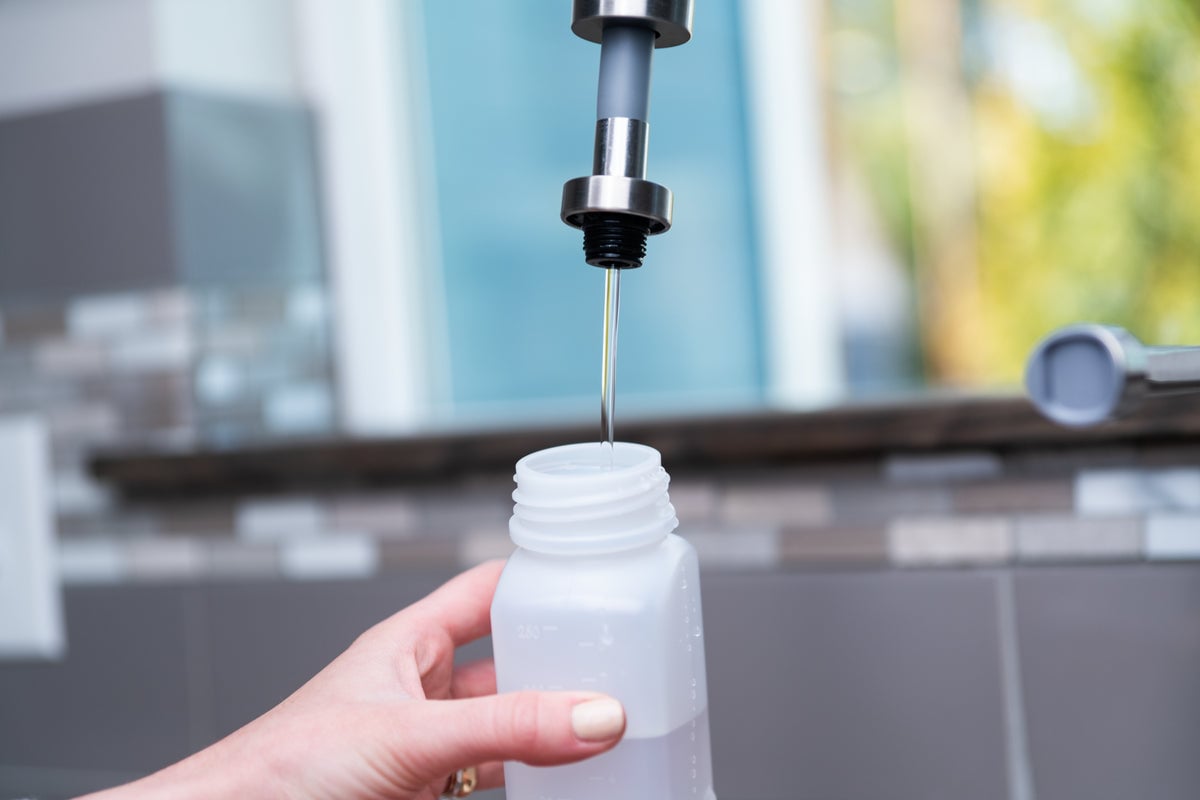
A close-up of a person's hand holding an open water bottle under a faucet as it is being filled with liquid.
Proper water sample collection technique for laboratory testing.

General Collection Guidelines

  1. Preparation:
    • Read all instructions that come with your test kit before collecting samples.
    • Wash hands thoroughly before handling collection containers.
    • Remove aerators or filters from the faucet being tested.
    • Select a cold water faucet that connects directly to your well system.
  2. Collection process:
    • For most contaminants, allow water to run for 3-5 minutes before collection.
    • For lead testing, collect the "first draw" sample after water has sat in pipes for 6+ hours.
    • Fill containers to the indicated line without touching the inside of the container or cap.
    • Securely tighten caps immediately after collection.
    • Complete all required information on sample containers and forms.
  3. Shipping:
    • Pack samples according to the provided instructions.
    • Ship samples as soon as possible after collection.
    • Follow any temperature control requirements (ice packs, etc.).
    • Use the provided shipping materials and labels.

Timing Considerations

  • Time of day: For certain contaminants like lead, early morning "first draw" samples are recommended.  [24] Drinking Water April 7, 2025 The Best Well Water Testing Kit of 2025 The most comprehensive test kit, TapScore, stood out for its exceptional accuracy. If you're looking for a DIY testing kit, Varify Premium may ... blog
  • Seasonal variations: Spring testing is ideal due to higher groundwater levels and potential runoff issues.  [11] ONIT Home November 30, 2022 How to Create a Schedule for Well Water Maintenance A schedule should involve a plan for maintaining the well system, including the water quality, wellhead, water treatment devices, and septic system. blog
  • After repairs: Test after any well system repairs or modifications.  [10] Viking Environmental and Septic Services January 2025 New Year, New Septic Maintenance Schedule: Planning for 2025 A comprehensive maintenance plan that will keep your septic system running efficiently throughout 2025 and beyond. blog
  • After environmental events: Test after flooding, nearby construction, or other potential contamination events.  [19] Drinking Water March 8, 2024 How to Maintain a Pressure Tank (2025) - Drinking Water Regular draining (usually every 6–12 months) prevents clogs in pipes and fittings, maintains efficient water flow, and reduces strain on the ... blog

Testing Frequency Guidelines

Regular water testing is essential for well owners to ensure water safety. Testing frequency depends on various factors including well characteristics, household composition, and local conditions.

Baseline Testing Recommendations

  • Annual testing (minimum) for:
  • Every 3-5 years for:

Increased Testing Frequency Situations

  • Households with specific populations:
  • After specific events:
    • Flooding near the well
    • Land disturbances near the well
    • Changes in water taste, odor, or appearance
    • Illness potentially related to water consumption
    • Well system repairs or modifications
    • Nearby construction or new potential contamination sources  [10] Viking Environmental and Septic Services January 2025 New Year, New Septic Maintenance Schedule: Planning for 2025 A comprehensive maintenance plan that will keep your septic system running efficiently throughout 2025 and beyond. blog   [19] Drinking Water March 8, 2024 How to Maintain a Pressure Tank (2025) - Drinking Water Regular draining (usually every 6–12 months) prevents clogs in pipes and fittings, maintains efficient water flow, and reduces strain on the ... blog

Interpreting Test Results

Understanding water test results is crucial for making informed decisions about water treatment and usage. This section provides guidance on interpreting common water quality parameters and determining when action is needed.

Key Water Quality Parameters

Microbiological Parameters

  • Total coliform bacteria: Should be absent (0 CFU/100mL). Presence indicates potential contamination pathways.  [3] US Environmental Protection Agency (EPA) September 17, 2024 How to Care for Your Septic System How to Care for Your Septic System · Inspect and Pump Frequently · Use Water Efficiently · Properly Dispose of Waste · Maintain Your Drainfield. Government Resource   [10] Viking Environmental and Septic Services January 2025 New Year, New Septic Maintenance Schedule: Planning for 2025 A comprehensive maintenance plan that will keep your septic system running efficiently throughout 2025 and beyond. blog
  • E. coli/fecal coliform: Must be absent (0 CFU/100mL). Presence indicates fecal contamination and requires immediate action.  [3] US Environmental Protection Agency (EPA) September 17, 2024 How to Care for Your Septic System How to Care for Your Septic System · Inspect and Pump Frequently · Use Water Efficiently · Properly Dispose of Waste · Maintain Your Drainfield. Government Resource

Chemical Parameters

  • Nitrate: Should be below 10 mg/L (as nitrogen). Particularly dangerous for infants under 6 months.  [3] US Environmental Protection Agency (EPA) September 17, 2024 How to Care for Your Septic System How to Care for Your Septic System · Inspect and Pump Frequently · Use Water Efficiently · Properly Dispose of Waste · Maintain Your Drainfield. Government Resource   [10] Viking Environmental and Septic Services January 2025 New Year, New Septic Maintenance Schedule: Planning for 2025 A comprehensive maintenance plan that will keep your septic system running efficiently throughout 2025 and beyond. blog
  • Nitrite: Should be below 1 mg/L.
  • Lead: Should be below 0.015 mg/L (15 ppb).
  • Arsenic: Should be below 0.010 mg/L (10 ppb).
  • Fluoride: Optimal range is 0.7-1.2 mg/L; should not exceed 4.0 mg/L.

Physical Parameters

  • pH: Ideal range is 6.5-8.5. Values outside this range can cause corrosion or scaling.
  • Total Dissolved Solids (TDS): Recommended below 500 mg/L.
  • Hardness: Soft: 0-60 mg/L; Moderate: 61-120 mg/L; Hard: 121-180 mg/L; Very Hard: >180 mg/L.
  • Turbidity: Should be below 1 NTU for aesthetic reasons.

Action Thresholds and Response

Emergency Response Required (Do not consume water until resolved)

  • Presence of E. coli or fecal coliform bacteria
  • Nitrate levels above 10 mg/L
  • Lead levels above 0.015 mg/L
  • Petroleum or chemical odors
  • Visible contamination  [3] US Environmental Protection Agency (EPA) September 17, 2024 How to Care for Your Septic System How to Care for Your Septic System · Inspect and Pump Frequently · Use Water Efficiently · Properly Dispose of Waste · Maintain Your Drainfield. Government Resource   [9] Hague Quality Water of Maryland Seasonal Well Testing and Treatment Tips Comprehensive guide to well water testing and maintenance for homeowners blog

Prompt Action Required (Within 30 days)

  • Presence of total coliform bacteria
  • Arsenic levels above 0.010 mg/L
  • Uranium levels above 0.030 mg/L
  • Radon levels above 4,000 pCi/L
  • Significant changes from previous test results

Treatment Recommended (Address when convenient)

  • Hardness above 120 mg/L
  • Iron above 0.3 mg/L
  • Manganese above 0.05 mg/L
  • TDS above 500 mg/L
  • pH below 6.5 or above 8.5

Understanding Laboratory Reports
Laboratory reports typically include the parameter tested, the result detected, measurement units, maximum contaminant levels, and potential sources of contamination to help you understand the significance of your results.

Treatment Decision Making

  • Confirm unexpected results: If results show concerning levels, consider retesting to confirm.
  • Address highest risks first: Prioritize contaminants with acute health effects.
  • Consider multiple treatment needs: Some systems address multiple contaminants.
  • Consult professionals: Water treatment professionals can help design appropriate treatment systems based on your specific results.
  • Regular monitoring: After installing treatment, test again to verify effectiveness.  [24] Drinking Water April 7, 2025 The Best Well Water Testing Kit of 2025 The most comprehensive test kit, TapScore, stood out for its exceptional accuracy. If you're looking for a DIY testing kit, Varify Premium may ... blog   [26] FieldInsight June 30, 2023 Geothermal System Maintenance Guide: A Comprehensive Approach Check and adjust the coolant levels to ensure proper heat transfer. · Inspect ground loops for leaks, damage, or soil erosion. · Clean or replace ... blog

Maintenance Record-Keeping and Scheduling

Key Points

Maintaining detailed records of all well and septic system components, inspections, and water testing results is essential for effective system management. Comprehensive documentation helps track system performance, identify patterns, predict potential issues, and provide valuable information for future homeowners. A well-organized maintenance calendar should account for seasonal factors, with specific tasks assigned to each season. Financial planning for maintenance costs is also crucial, with recommended monthly savings of $50-100 for septic systems and $15-30 for well systems to cover routine maintenance and eventual repairs.

Documentation Best Practices

Maintaining comprehensive records of your well and septic system is essential for tracking performance, planning maintenance, and providing information to future homeowners or service providers.

Essential Documentation to Maintain

System Specifications

  • Well depth, diameter, and construction details
  • Pump specifications (model, horsepower, installation date)
  • Septic tank size, material, and installation date
  • Drainfield dimensions and configuration
  • Water treatment equipment specifications
  • System component warranties and manuals
  • Original permits and inspection certificates  [12] Drainfield Solutions Seasonal Septic System Maintenance: Year-Round Guide for a Healthy Septic System 1. Inspect for Damage from Winter ... The freezing temperatures of winter can cause cracks in pipes, damage to septic tank lids, or even issues in ... Local Service Business Website  

Maintenance History

  • Dates of all inspections and pumping services
  • Water testing results with dates
  • Repairs performed and parts replaced
  • Filter changes and treatment system service
  • Professional service provider contact information
  • Costs of services performed  [12] Drainfield Solutions Seasonal Septic System Maintenance: Year-Round Guide for a Healthy Septic System 1. Inspect for Damage from Winter ... The freezing temperatures of winter can cause cracks in pipes, damage to septic tank lids, or even issues in ... Local Service Business Website  

Water Usage Data

  • Number of household occupants
  • Significant changes in water usage patterns
  • Installation of water-using appliances
  • Water meter readings (if available)
  • Seasonal variations in usage

Record-Keeping Methods

Thorough documentation of your well and septic system maintenance not only ensures proper care but can increase your property value by demonstrating responsible stewardship.

Digital Documentation Options

  • Dedicated home maintenance apps
  • Cloud storage for scanned documents and photos
  • Spreadsheets for tracking maintenance schedules
  • Digital calendar with maintenance reminders
  • Photo documentation of system components and repairs

Physical Documentation Options

  • Dedicated binder with tabbed sections for different system components
  • File folder system organized by component
  • Maintenance log book kept near systems
  • Wall calendar with maintenance schedule
  • Property map showing system locations

Documentation Organization Tips

  • Create a master system diagram showing locations of all components.
  • Take photos of components before they're buried or enclosed.
  • Keep receipts and warranty information with maintenance records.
  • Update records immediately after any service or testing.
  • Store digital backups of all physical records.
  • Include emergency contact information for service providers.
  • Maintain a quick-reference sheet with key system specifications.

Benefits of Thorough Documentation

  • Helps identify patterns in system performance
  • Provides critical information for troubleshooting
  • Ensures warranty requirements are met
  • Facilitates proper timing of routine maintenance
  • Increases property value with documented care history
  • Simplifies handoff to new homeowners if property is sold
  • Supports insurance claims if system damage occurs  [12] Drainfield Solutions Seasonal Septic System Maintenance: Year-Round Guide for a Healthy Septic System 1. Inspect for Damage from Winter ... The freezing temperatures of winter can cause cracks in pipes, damage to septic tank lids, or even issues in ... Local Service Business Website  

Maintenance Calendar and Scheduling

Creating a comprehensive maintenance calendar ensures that all necessary tasks are performed at the appropriate intervals, helping to prevent system failures and extend equipment life.

Annual Maintenance Calendar

Spring (Current Season: Spring 2025)

  • Comprehensive well water testing  [11] ONIT Home November 30, 2022 How to Create a Schedule for Well Water Maintenance A schedule should involve a plan for maintaining the well system, including the water quality, wellhead, water treatment devices, and septic system. blog
  • Visual inspection of well head and surrounding area  [11] ONIT Home November 30, 2022 How to Create a Schedule for Well Water Maintenance A schedule should involve a plan for maintaining the well system, including the water quality, wellhead, water treatment devices, and septic system. blog
  • Check for wet spots over septic drainfield after winter thaw  [38] Drainfield Solutions March 16, 2025 DIY Septic System Maintenance vs. Professional Septic System Services Cost Comparison: DIY vs. Professional Septic Maintenance. Cost is a major factor for homeowners deciding between DIY and professional services. local business blog
  • Inspect septic tank access points for damage from freeze-thaw cycles  [7] US Environmental Protection Agency (EPA) October 9, 2024 Protect Your Home's Water Test your private well annually for total coliform bacteria, nitrates, total dissolved solids, and pH levels. Government Resource
  • Clean or replace water treatment system filters
  • Test water heater pressure relief valve
  • Check geothermal system performance as cooling season begins

Summer

  • Monitor water usage during peak demand period
  • Check for proper drainage around well head
  • Inspect visible plumbing for leaks
  • Clean effluent filter (if accessible)
  • Flush water heater (traditional tank systems)
  • Inspect air conditioning condensate drainage (ensure it's away from septic system)

Fall

  • Prepare well and septic systems for winter
  • Insulate exposed well components and pipes
  • Check heating system operation before continuous use
  • Schedule septic pumping if due (before ground freezes)
  • Descale tankless water heater if needed
  • Ensure well head and septic access points are marked before potential snow cover

Financial Planning for Maintenance

Proper financial planning for well and septic system maintenance helps prevent unexpected expenses and ensures funds are available when needed for routine care and eventual repairs.

Typical Maintenance Costs

Well System Costs

Septic System Costs

  • Tank pumping: $250-$500 every 3-5 years  [6] Ray's Twilight Septic Service Find Out When to Pump Your Septic Tank with Our Calculator. Use our Septic Tank Pumping Frequency Calculator to determine the best time for your septic maintenance. Quick, easy, and accurate. service website
  • Professional inspection: $100-$200 annually
  • Effluent filter replacement: $50-$200 every 3-5 years
  • Septic pump replacement: $500-$1,200 every 10-20 years
  • Drainfield maintenance: Varies widely based on system
  • Emergency repairs: $5,000-$15,000 if system fails  [6] Ray's Twilight Septic Service Find Out When to Pump Your Septic Tank with Our Calculator. Use our Septic Tank Pumping Frequency Calculator to determine the best time for your septic maintenance. Quick, easy, and accurate. service website

Regional and Special Considerations

Key Points

Different regions present unique challenges for well and septic systems. Coastal areas face high water tables and saltwater intrusion, requiring specialized system designs and more frequent maintenance. Cold climates need protection against freezing, with specific winterization protocols and emergency plans for power outages. Vacation homes require special attention during extended absences. Natural disasters like floods, fires, and droughts can significantly impact system integrity, requiring specific post-event testing and maintenance. Understanding these regional variations and special circumstances is essential for effective system management.

Coastal and High Water Table Areas
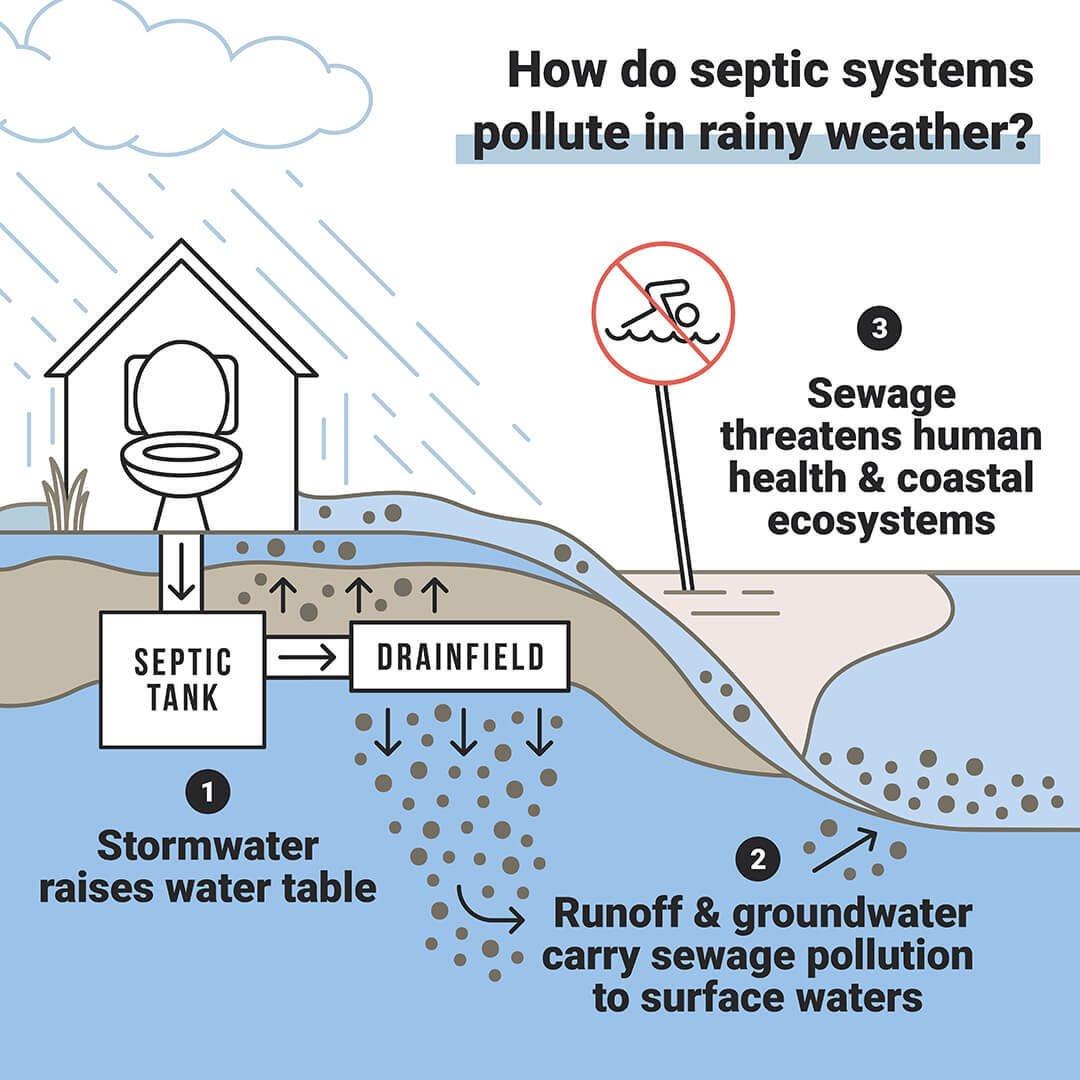
Diagram showing how septic systems pollute in rainy weather: stormwater raises the water table, causing runoff and groundwater to carry sewage pollution to surface waters, which threatens human health and coastal ecosystems.
Diagram showing how high water tables affect septic system function during rainy weather.

Coastal regions and areas with high water tables present unique challenges for well and septic systems due to saturated soil conditions and potential saltwater intrusion.

Challenges for Well Systems

  • Saltwater intrusion: Seawater can infiltrate groundwater systems, especially during droughts or with over-pumping.  [18] Austin Drilling & Well Repair Inc Water Well Pressure Tank Maintenance: Extending Lifespan and Preventing Issues Comprehensive guide to maintaining water well pressure tanks for optimal performance and longevity professional services blog
  • Corrosion: Salt exposure accelerates corrosion of well components and plumbing.
  • Water quality fluctuations: Tidal influences can cause changes in water quality.
  • Flooding vulnerability: Coastal storms can submerge well heads and introduce contaminants.

Challenges for Septic Systems

Specialized Maintenance Requirements

Well Systems in Coastal Areas

  • More frequent water testing: Test quarterly for chlorides, sodium, and total dissolved solids.
  • Corrosion monitoring: Inspect metal components more frequently for corrosion.
  • Reduced pumping rates: Pump at lower rates to prevent saltwater upconing.
  • Well head protection: Ensure well heads are elevated and properly sealed against flooding.
  • Water treatment considerations: Install appropriate treatment for brackish water if needed.

Septic Systems in High Water Table Areas

  • More frequent pumping: Pump tanks every 2-3 years instead of 3-5 years.  [18] Austin Drilling & Well Repair Inc Water Well Pressure Tank Maintenance: Extending Lifespan and Preventing Issues Comprehensive guide to maintaining water well pressure tanks for optimal performance and longevity professional services blog
  • System inspection: Inspect for signs of water infiltration or leakage twice yearly.
  • Drainfield monitoring: Check for surfacing effluent, especially after heavy rains.
  • Water conservation: Reduce water usage during periods of high water table.
  • Professional evaluation: Have the system professionally assessed after major storms.

Specialized System Designs

  • Mound systems: Elevated drainfields that provide additional soil depth for treatment.
  • Advanced treatment units (ATUs): Provide additional treatment before effluent reaches the drainfield.  [18] Austin Drilling & Well Repair Inc Water Well Pressure Tank Maintenance: Extending Lifespan and Preventing Issues Comprehensive guide to maintaining water well pressure tanks for optimal performance and longevity professional services blog
  • Drip irrigation systems: Shallow, pressure-dosed effluent distribution systems.
  • Lined drainfields: Prevent groundwater infiltration into the drainfield.
  • Corrosion-resistant materials: Fiberglass or polyethylene tanks resist saltwater corrosion.  [18] Austin Drilling & Well Repair Inc Water Well Pressure Tank Maintenance: Extending Lifespan and Preventing Issues Comprehensive guide to maintaining water well pressure tanks for optimal performance and longevity professional services blog

Cold Climate Considerations

Cold climates present unique challenges for well and septic systems, particularly during winter months when freezing temperatures can damage components and disrupt operation.

Freezing Prevention for Well Systems

  • Proper well house insulation: Ensure pump houses maintain temperatures above freezing.
  • Heat tape installation: Apply to exposed pipes and fittings.
  • Proper burial depth: All water lines should be below the local frost line.
  • Constant circulation: Consider a small bleeder valve to maintain water movement during extreme cold.
  • Proper drainage: Ensure all exterior components drain properly to prevent ice formation.

Septic System Winter Protection

  • Snow cover maintenance: Maintain natural snow cover over the drainfield for insulation, but avoid compaction.  [17] Health Canada 2024-08-02 Well water and health: Well safety during and after emergencies After an emergency, it's important to make sure your well water is safe before using it again. Have a back-up water supply ready in case of emergencies. Government Resource
  • System insulation: Add insulation to tanks and pipes in shallow installations.
  • Regular use: Consistent water usage helps prevent freezing.
  • Proper installation: Ensure all components are below the frost line where possible.
  • Antifreeze considerations: Never add automotive antifreeze to septic systems; use only propylene glycol if necessary.

Winter Emergency Preparations

  • Power outage plan: Develop a strategy for maintaining system function during outages.  [17] Health Canada 2024-08-02 Well water and health: Well safety during and after emergencies After an emergency, it's important to make sure your well water is safe before using it again. Have a back-up water supply ready in case of emergencies. Government Resource
  • Emergency contact information: Keep contact information for service providers specializing in winter repairs.
  • Temporary heat sources: Have safe heating options available for pump houses or exposed components.
  • Water conservation strategy: Plan for reduced water usage during system stress periods.
  • Frozen pipe response plan: Know how to safely thaw frozen pipes without causing damage.

Vacation Home and Extended Absence Protocols

Homes that are unoccupied for extended periods require special maintenance protocols to ensure well and septic systems remain functional and avoid damage during absence.

Well System Absence Protocols

Short Absences (1-2 weeks)

  • Leave power to the well system on.
  • Consider shutting off water to the house if there's risk of interior plumbing leaks.
  • Ensure adequate heating to prevent freezing if absent during cold weather.
  • Have a neighbor or property manager check the property periodically.

Extended Absences (More than 2 weeks)

Option 1: Keep system operational

  • Maintain power to the well pump.
  • Install a pressure tank cycle counter to detect leaks.
  • Maintain adequate heating in pump areas during cold weather.
  • Arrange for someone to run water weekly to prevent stagnation.

Option 2: Winterize the system

  • Turn off power to the well pump.
  • Drain pressure tank and household plumbing.
  • Add appropriate antifreeze to toilet bowls and traps.
  • Have a professional blow out water lines with compressed air if in freezing climates.

Natural Disaster Response

Flooding can severely impact well and septic systems, requiring thorough inspection before resuming use.

Natural disasters can significantly impact well and septic systems, requiring specific response protocols to ensure safety and restore functionality.

Flood Response for Well Systems

  • Do not use well water until proper testing confirms safety.  [19] Drinking Water March 8, 2024 How to Maintain a Pressure Tank (2025) - Drinking Water Regular draining (usually every 6–12 months) prevents clogs in pipes and fittings, maintains efficient water flow, and reduces strain on the ... blog
  • Inspect well head for physical damage and signs of submersion.
  • Electrical safety check: Have a professional inspect electrical components before restoring power.
  • Disinfection procedure:
    1. Pump out standing water around the well head.
    2. Have a professional disinfect the well with chlorine.
    3. Run water through outdoor spigots until chlorine odor dissipates.
    4. Test water for bacteria, nitrates, and other contaminants before using.
  • Component inspection: Have pump, pressure tank, and controls professionally evaluated.

Flood Response for Septic Systems

  • Reduce water usage until floodwaters recede and the drainfield dries.
  • Do not pump the septic tank during flooded conditions, as it may float out of the ground.
  • Inspect for damage once floodwaters recede:
    • Check for tank shifting or flotation
    • Look for eroded soil over system components
    • Inspect access ports and risers for damage
  • Professional evaluation: Have the entire system professionally inspected before returning to normal use.
  • Drainfield recovery: Allow saturated drainfields to dry completely before resuming normal water usage.

Conclusion

Proper maintenance of residential well and septic systems is not merely a recommendation—it's an essential responsibility for homeowners who rely on these systems. Unlike municipal water and sewer services, private wells and septic systems are not regulated by government agencies, placing the burden of ensuring safe drinking water and proper waste management entirely on the homeowner.  [1] Centers for Disease Control and Prevention (CDC) July 1, 2024 Guidelines for Testing Well Water Test your well water at least once every year for total coliform bacteria, nitrates, total dissolved solids, and pH level. government health agency   [2] National Ground Water Association (NGWA) Homeowner's Maintenance Checklist - Wellowner.org An annual well maintenance check, including a bacterial test, is recommended. Drinking water should be checked any time there is a change in taste, odor or ... educational resource   [3] US Environmental Protection Agency (EPA) September 17, 2024 How to Care for Your Septic System How to Care for Your Septic System · Inspect and Pump Frequently · Use Water Efficiently · Properly Dispose of Waste · Maintain Your Drainfield. Government Resource

The research presented in this guide highlights several critical findings:

  1. Preventative maintenance is cost-effective: Regular septic system maintenance ($250-$500 every 3-5 years) is dramatically cheaper than emergency repairs ($5,000-$15,000).  [6] Ray's Twilight Septic Service Find Out When to Pump Your Septic Tank with Our Calculator. Use our Septic Tank Pumping Frequency Calculator to determine the best time for your septic maintenance. Quick, easy, and accurate. service website Similarly, annual well maintenance ($150-$350) can prevent costly pump replacements and water quality issues.  [13] JT Services DIY vs. Professional Septic System Repairs This complete guide will walk you through the decision making process of DIY vs professional septic system repairs. blog
  2. System longevity depends on proper care: With appropriate maintenance, concrete septic tanks can last 50+ years, well systems can provide 20+ years of service, and geothermal ground loops can function for 50+ years.  [4] US Environmental Protection Agency (EPA) March 24, 2025 Why Maintain Your Septic System | US EPA In general, a septic tank should be inspected every 1 to 3 years and pumped every 3 to 5 years. · Spring is a great time to service your septic ... Government Agency   [6] Ray's Twilight Septic Service Find Out When to Pump Your Septic Tank with Our Calculator. Use our Septic Tank Pumping Frequency Calculator to determine the best time for your septic maintenance. Quick, easy, and accurate. service website   [29] Scott-Lee Heating Company August 6, 2014 Troubleshooting Checklist Geothermal Systems Geothermal systems need regular maintenance to prevent breakdowns HVAC service blog
  3. Water quality requires vigilance: With one in five private wells containing contaminants above health benchmarks, regular testing is essential for ensuring family safety.  [1] Centers for Disease Control and Prevention (CDC) July 1, 2024 Guidelines for Testing Well Water Test your well water at least once every year for total coliform bacteria, nitrates, total dissolved solids, and pH level. government health agency Annual testing is the minimum recommendation, with more frequent testing needed for vulnerable populations or after environmental events.  [3] US Environmental Protection Agency (EPA) September 17, 2024 How to Care for Your Septic System How to Care for Your Septic System · Inspect and Pump Frequently · Use Water Efficiently · Properly Dispose of Waste · Maintain Your Drainfield. Government Resource   [9] Hague Quality Water of Maryland Seasonal Well Testing and Treatment Tips Comprehensive guide to well water testing and maintenance for homeowners blog   [10] Viking Environmental and Septic Services January 2025 New Year, New Septic Maintenance Schedule: Planning for 2025 A comprehensive maintenance plan that will keep your septic system running efficiently throughout 2025 and beyond. blog
  4. Regional factors matter: Different climates and geological conditions create unique maintenance challenges, from freezing concerns in northern regions to saltwater intrusion in coastal areas.  [17] Health Canada 2024-08-02 Well water and health: Well safety during and after emergencies After an emergency, it's important to make sure your well water is safe before using it again. Have a back-up water supply ready in case of emergencies. Government Resource   [18] Austin Drilling & Well Repair Inc Water Well Pressure Tank Maintenance: Extending Lifespan and Preventing Issues Comprehensive guide to maintaining water well pressure tanks for optimal performance and longevity professional services blog
  5. Documentation is crucial: Maintaining comprehensive records of all maintenance, testing, and repairs provides valuable system insights and can significantly enhance property value.  [12] Drainfield Solutions Seasonal Septic System Maintenance: Year-Round Guide for a Healthy Septic System 1. Inspect for Damage from Winter ... The freezing temperatures of winter can cause cracks in pipes, damage to septic tank lids, or even issues in ... Local Service Business Website  

By following the maintenance schedules, procedures, and recommendations outlined in this guide, homeowners can ensure their well and septic systems operate efficiently, provide safe water, and avoid costly failures. Remember that while many maintenance tasks can be performed by homeowners, certain procedures require professional expertise to ensure safety and proper system function.

Implementing a structured maintenance program based on this guide will not only protect your investment but also safeguard your family's health and the environment for years to come.

Sources

government resource
[1]
"Around 15 percent of the U.S. population (over 43 million) rely on private wells as their source of drinking water."
US Environmental Protection Agency (EPA)
Private Drinking Water Wells
Provides information on private drinking water wells, types of well, well construction. How to prevent health risks associated with private wells.
March 24, 2025
government resource
[1]
"A U.S. Geologic Survey study of 2,100 private wells found that water pumped from about one in five wells contained one or more contaminants at a concentration greater than a human-health benchmark for drinking water."
US Environmental Protection Agency (EPA)
Private Drinking Water Wells
Provides information on private drinking water wells, types of well, well construction. How to prevent health risks associated with private wells.
March 24, 2025
government resource
[1]
"EPA estimates that more than 23 million households rely on private wells for drinking water in the United States."
US Environmental Protection Agency (EPA)
Private Drinking Water Wells
Provides information on private drinking water wells, types of well, well construction. How to prevent health risks associated with private wells.
March 24, 2025
government resource
[1]
"Private well owners are responsible for delivering safe drinking water to their households. The quality and safety of drinking water from private domestic wells are not regulated by the Federal Government under the Safe Drinking Water Act nor by most state governments and laws."
US Environmental Protection Agency (EPA)
Private Drinking Water Wells
Provides information on private drinking water wells, types of well, well construction. How to prevent health risks associated with private wells.
March 24, 2025
Government Health Agency
[2]
"If you have a privately owned well, you are responsible for making sure your tap water is safe to drink. Proper well construction and continued maintenance help keep harmful germs and chemicals out of your well water."
Centers for Disease Control and Prevention (CDC)
Well Water Safety
Regular maintenance is important to keep your well water safe. Get a well checkup every year, and test your water and check your well if you ever suspect a problem.
June 4, 2024
Government Health Agency
[2]
"Well water can become unsafe to drink and use if it gets polluted by: Leaks from landfills, Septic systems that are not working correctly, Leaks from underground fuel tanks, Fertilizers or pesticides, Water runoff from cities or industrial buildings, High levels of naturally occurring chemicals, such as arsenic or radon, in the land around a well, Poop from animal feedlots."
Centers for Disease Control and Prevention (CDC)
Well Water Safety
Regular maintenance is important to keep your well water safe. Get a well checkup every year, and test your water and check your well if you ever suspect a problem.
June 4, 2024
Government Health Agency
[2]
"Locate your well a safe distance from possible sources of harmful germs and chemicals. Make sure your well is at least: 50 feet from septic tanks, 50 feet from septic leach fields, 50 feet from livestock yards, 100 feet from petroleum tanks, 100 feet from where liquid-tight manure is stored, 100 feet from where fertilizer is stored or handled, 250 feet from manure stacks."
Centers for Disease Control and Prevention (CDC)
Well Water Safety
Regular maintenance is important to keep your well water safe. Get a well checkup every year, and test your water and check your well if you ever suspect a problem.
June 4, 2024
Government Health Agency
[2]
"Regular maintenance is important to keep your well water safe. Get a well checkup every year, and test your water and check your well if you ever suspect a problem. At least once each year: Test your well water for harmful germs and chemicals, Check your well for mechanical problems and cleanliness."
Centers for Disease Control and Prevention (CDC)
Well Water Safety
Regular maintenance is important to keep your well water safe. Get a well checkup every year, and test your water and check your well if you ever suspect a problem.
June 4, 2024
government health agency
[3]
"Test your well water at least once every year for total coliform bacteria, nitrates, total dissolved solids, and pH level."
Centers for Disease Control and Prevention (CDC)
Guidelines for Testing Well Water
Test your well water at least once every year for total coliform bacteria, nitrates, total dissolved solids, and pH level.
July 1, 2024
government health agency
[3]
"The U.S. Environmental Protection Agency's (EPA) rules that protect public drinking water systems do not apply to privately owned wells. Government officials do not regulate, treat, or monitor tap water from private wells."
Centers for Disease Control and Prevention (CDC)
Guidelines for Testing Well Water
Test your well water at least once every year for total coliform bacteria, nitrates, total dissolved solids, and pH level.
July 1, 2024
government health agency
[3]
"Coliform bacteria live in people's and animals' digestive systems (guts), in soil, on plants, and in surface water like lakes or rivers. These bacteria generally will not make you sick. However, coliform bacteria typically get into your water the same way as germs that do cause disease (for example, from a sewage leak), and are much easier to test for."
Centers for Disease Control and Prevention (CDC)
Guidelines for Testing Well Water
Test your well water at least once every year for total coliform bacteria, nitrates, total dissolved solids, and pH level.
July 1, 2024
government health agency
[3]
"High levels of nitrates in your water can make you, and especially babies, sick. Nitrates in your well water can come from animal waste, septic systems, wastewater, flooded sewers, polluted storm water runoff, fertilizers, runoff from farms, and decaying plants."
Centers for Disease Control and Prevention (CDC)
Guidelines for Testing Well Water
Test your well water at least once every year for total coliform bacteria, nitrates, total dissolved solids, and pH level.
July 1, 2024
government health agency
[3]
"As a water well owner, you are responsible for testing your well to make sure the water is safe to drink."
Centers for Disease Control and Prevention (CDC)
Guidelines for Testing Well Water
Test your well water at least once every year for total coliform bacteria, nitrates, total dissolved solids, and pH level.
July 1, 2024
government health agency
[3]
"At least once every year, test your well water for: Total coliforms (specific types of bacteria), pH, Total dissolved solids, Nitrates, Other germs and chemicals of concern in your area"
Centers for Disease Control and Prevention (CDC)
Guidelines for Testing Well Water
Test your well water at least once every year for total coliform bacteria, nitrates, total dissolved solids, and pH level.
July 1, 2024
government health agency
[3]
"Coliform bacteria live in people's and animals' digestive systems (guts), in soil, on plants, and in surface water like lakes or rivers. These bacteria generally will not make you sick. However, coliform bacteria typically get into your water the same way as germs that do cause disease (for example, from a sewage leak), and are much easier to test for."
Centers for Disease Control and Prevention (CDC)
Guidelines for Testing Well Water
Test your well water at least once every year for total coliform bacteria, nitrates, total dissolved solids, and pH level.
July 1, 2024
government health agency
[3]
"High levels of nitrates in your water can make you, and especially babies, sick. Nitrates in your well water can come from animal waste, septic systems, wastewater, flooded sewers, polluted storm water runoff, fertilizers, runoff from farms, and decaying plants."
Centers for Disease Control and Prevention (CDC)
Guidelines for Testing Well Water
Test your well water at least once every year for total coliform bacteria, nitrates, total dissolved solids, and pH level.
July 1, 2024
educational resource
[4]
"Properly constructed private water supply systems require little routine maintenance. These simple steps will help protect your system and investment:"
National Ground Water Association (NGWA)
Homeowner's Maintenance Checklist - Wellowner.org
An annual well maintenance check, including a bacterial test, is recommended. Drinking water should be checked any time there is a change in taste, odor or ...
educational resource
[4]
"An annual well maintenance check, including a bacterial test, is recommended. Drinking water should be checked any time there is a change in taste, odor or appearance, or when the well system is serviced."
National Ground Water Association (NGWA)
Homeowner's Maintenance Checklist - Wellowner.org
An annual well maintenance check, including a bacterial test, is recommended. Drinking water should be checked any time there is a change in taste, odor or ...
educational resource
[4]
"Keep hazardous chemicals, such as paint, fertilizer, pesticides, and motor oil far away from your well."
National Ground Water Association (NGWA)
Homeowner's Maintenance Checklist - Wellowner.org
An annual well maintenance check, including a bacterial test, is recommended. Drinking water should be checked any time there is a change in taste, odor or ...
educational resource
[4]
"When your well has come to the end of its serviceable life (usually 20+ years), have a qualified water well contractor decommission it after constructing your new system."
National Ground Water Association (NGWA)
Homeowner's Maintenance Checklist - Wellowner.org
An annual well maintenance check, including a bacterial test, is recommended. Drinking water should be checked any time there is a change in taste, odor or ...
Government Resource
[5]
"Septic system maintenance is not complicated, and it does not need to be expensive. Upkeep comes down to four key elements: Inspect and Pump Frequently, Use Water Efficiently, Properly Dispose of Waste, and Maintain Your Drainfield."
US Environmental Protection Agency (EPA)
How to Care for Your Septic System
How to Care for Your Septic System · Inspect and Pump Frequently · Use Water Efficiently · Properly Dispose of Waste · Maintain Your Drainfield.
September 17, 2024
Government Resource
[5]
"The average household septic system should be inspected at least every three years by a septic service professional. Household septic tanks are typically pumped every three to five years. Alternative systems with electrical float switches, pumps, or mechanical components should be inspected more often, generally once a year."
US Environmental Protection Agency (EPA)
How to Care for Your Septic System
How to Care for Your Septic System · Inspect and Pump Frequently · Use Water Efficiently · Properly Dispose of Waste · Maintain Your Drainfield.
September 17, 2024
Government Resource
[5]
"All the water a household sends down its pipes ends up in its septic system. The more water a household conserves, the less water enters the septic system. Efficient water use improves the operation of a septic system and reduces the risk of malfunctions."
US Environmental Protection Agency (EPA)
How to Care for Your Septic System
How to Care for Your Septic System · Inspect and Pump Frequently · Use Water Efficiently · Properly Dispose of Waste · Maintain Your Drainfield.
September 17, 2024
Government Resource
[5]
"Your septic system is not a trash can. An easy rule of thumb is not to flush anything besides human waste and toilet paper."
US Environmental Protection Agency (EPA)
How to Care for Your Septic System
How to Care for Your Septic System · Inspect and Pump Frequently · Use Water Efficiently · Properly Dispose of Waste · Maintain Your Drainfield.
September 17, 2024
Government Resource
[5]
"Your septic system contains a collection of living organisms that digest and treat household waste. Pouring toxins down your drain can kill these organisms and harm your septic system."
US Environmental Protection Agency (EPA)
How to Care for Your Septic System
How to Care for Your Septic System · Inspect and Pump Frequently · Use Water Efficiently · Properly Dispose of Waste · Maintain Your Drainfield.
September 17, 2024
Government Resource
[5]
"The average household septic system should be inspected at least every three years by a septic service professional. Household septic tanks are typically pumped every three to five years."
US Environmental Protection Agency (EPA)
How to Care for Your Septic System
How to Care for Your Septic System · Inspect and Pump Frequently · Use Water Efficiently · Properly Dispose of Waste · Maintain Your Drainfield.
September 17, 2024
Government Resource
[5]
"The average indoor water use in a typical single-family home can be as much as 70 gallons per individual, per day. Just a single leaky or running toilet can add as much as 200 gallons of water per day."
US Environmental Protection Agency (EPA)
How to Care for Your Septic System
How to Care for Your Septic System · Inspect and Pump Frequently · Use Water Efficiently · Properly Dispose of Waste · Maintain Your Drainfield.
September 17, 2024
Government Resource
[5]
"Your septic system is not a trash can. An easy rule of thumb is not to flush anything besides human waste and toilet paper."
US Environmental Protection Agency (EPA)
How to Care for Your Septic System
How to Care for Your Septic System · Inspect and Pump Frequently · Use Water Efficiently · Properly Dispose of Waste · Maintain Your Drainfield.
September 17, 2024
Government Resource
[5]
"Your septic system contains a collection of living organisms that digest and treat household waste. Pouring toxins down your drain can kill these organisms and harm your septic system."
US Environmental Protection Agency (EPA)
How to Care for Your Septic System
How to Care for Your Septic System · Inspect and Pump Frequently · Use Water Efficiently · Properly Dispose of Waste · Maintain Your Drainfield.
September 17, 2024
Government Resource
[5]
"Your drainfield—a component of your septic system that removes contaminants from the liquid that emerges from your septic tank—is an important part of your septic system."
US Environmental Protection Agency (EPA)
How to Care for Your Septic System
How to Care for Your Septic System · Inspect and Pump Frequently · Use Water Efficiently · Properly Dispose of Waste · Maintain Your Drainfield.
September 17, 2024
Government Agency
[6]
"Regular septic system maintenance fees of $250 to $500 every three to five years is a bargain compared to the cost of repairing or replacing a malfunctioning system, which can cost between $5,000 and $15,000 for a conventional system."
US Environmental Protection Agency (EPA)
Why Maintain Your Septic System | US EPA
In general, a septic tank should be inspected every 1 to 3 years and pumped every 3 to 5 years. · Spring is a great time to service your septic ...
March 24, 2025
Government Agency
[6]
"More than four billion gallons of wastewater are dispersed below the ground's surface every day. Ground water contaminated by poorly or untreated household wastewater poses dangers to drinking water and to the environment."
US Environmental Protection Agency (EPA)
Why Maintain Your Septic System | US EPA
In general, a septic tank should be inspected every 1 to 3 years and pumped every 3 to 5 years. · Spring is a great time to service your septic ...
March 24, 2025
Government Agency
[6]
"In general, a septic tank should be inspected every 1 to 3 years and pumped every 3 to 5 years. The frequency of pumping the septic tank depends on the tank size, number of people in the household, habits of water use as well as the amount of solids accumulated in the tank."
US Environmental Protection Agency (EPA)
Why Maintain Your Septic System | US EPA
In general, a septic tank should be inspected every 1 to 3 years and pumped every 3 to 5 years. · Spring is a great time to service your septic ...
March 24, 2025
Government Agency
[6]
"Typically, a septic tank made of concrete may last 50 years or more, although older tanks may not be as well constructed as newer tanks. Tanks made from other materials, such as plastic may last a similar timeframe."
US Environmental Protection Agency (EPA)
Why Maintain Your Septic System | US EPA
In general, a septic tank should be inspected every 1 to 3 years and pumped every 3 to 5 years. · Spring is a great time to service your septic ...
March 24, 2025
Government Agency
[6]
"If your septic system includes a pump, many pumps and controls will need to be replaced every 10 to 20 years. If you have an advanced treatment unit, check with the manufacturer for estimates of lifespan and warranty information."
US Environmental Protection Agency (EPA)
Why Maintain Your Septic System | US EPA
In general, a septic tank should be inspected every 1 to 3 years and pumped every 3 to 5 years. · Spring is a great time to service your septic ...
March 24, 2025
Government Agency
[6]
"Regular septic system maintenance fees of $250 to $500 every three to five years is a bargain compared to the cost of repairing or replacing a malfunctioning system, which can cost between $5,000 and $15,000 for a conventional system."
US Environmental Protection Agency (EPA)
Why Maintain Your Septic System | US EPA
In general, a septic tank should be inspected every 1 to 3 years and pumped every 3 to 5 years. · Spring is a great time to service your septic ...
March 24, 2025
Government Agency
[6]
"An unusable septic system or one in disrepair will lower your property value, and potentially can pose a costly legal liability."
US Environmental Protection Agency (EPA)
Why Maintain Your Septic System | US EPA
In general, a septic tank should be inspected every 1 to 3 years and pumped every 3 to 5 years. · Spring is a great time to service your septic ...
March 24, 2025
Government Agency
[6]
"Household wastewater contains disease causing bacteria and viruses and high levels of nitrogen and phosphorus. If a septic system is well-maintained and working properly, it will remove most of these pollutants."
US Environmental Protection Agency (EPA)
Why Maintain Your Septic System | US EPA
In general, a septic tank should be inspected every 1 to 3 years and pumped every 3 to 5 years. · Spring is a great time to service your septic ...
March 24, 2025
Government Agency
[6]
"More than four billion gallons of wastewater are dispersed below the ground's surface every day. Ground water contaminated by poorly or untreated household wastewater poses dangers to drinking water and to the environment."
US Environmental Protection Agency (EPA)
Why Maintain Your Septic System | US EPA
In general, a septic tank should be inspected every 1 to 3 years and pumped every 3 to 5 years. · Spring is a great time to service your septic ...
March 24, 2025
Government Agency
[6]
"In general, a septic tank should be inspected every 1 to 3 years and pumped every 3 to 5 years. The frequency of pumping the septic tank depends on the tank size, number of people in the household, habits of water use as well as the amount of solids accumulated in the tank."
US Environmental Protection Agency (EPA)
Why Maintain Your Septic System | US EPA
In general, a septic tank should be inspected every 1 to 3 years and pumped every 3 to 5 years. · Spring is a great time to service your septic ...
March 24, 2025
Government Agency
[6]
"Typically, a septic tank made of concrete may last 50 years or more, although older tanks may not be as well constructed as newer tanks. Tanks made from other materials, such as plastic may last a similar timeframe."
US Environmental Protection Agency (EPA)
Why Maintain Your Septic System | US EPA
In general, a septic tank should be inspected every 1 to 3 years and pumped every 3 to 5 years. · Spring is a great time to service your septic ...
March 24, 2025
Government Agency
[6]
"EPA does not make recommendations on individual septic system products. Commercially available microbiological and enzyme additives are promoted to reduce sludge and scum accumulation in septic tanks. However, these additives are not necessary for a septic system to function properly when treating domestic wastewater."
US Environmental Protection Agency (EPA)
Why Maintain Your Septic System | US EPA
In general, a septic tank should be inspected every 1 to 3 years and pumped every 3 to 5 years. · Spring is a great time to service your septic ...
March 24, 2025
Government Agency
[6]
"Regular septic system maintenance fees of $250 to $500 every three to five years is a bargain compared to the cost of repairing or replacing a malfunctioning system, which can cost between $5,000 and $15,000 for a conventional system."
US Environmental Protection Agency (EPA)
Why Maintain Your Septic System | US EPA
In general, a septic tank should be inspected every 1 to 3 years and pumped every 3 to 5 years. · Spring is a great time to service your septic ...
March 24, 2025
Government Agency
[6]
"Household wastewater contains disease causing bacteria and viruses and high levels of nitrogen and phosphorus. If a septic system is well-maintained and working properly, it will remove most of these pollutants."
US Environmental Protection Agency (EPA)
Why Maintain Your Septic System | US EPA
In general, a septic tank should be inspected every 1 to 3 years and pumped every 3 to 5 years. · Spring is a great time to service your septic ...
March 24, 2025
Government Agency
[6]
"More than four billion gallons of wastewater are dispersed below the ground's surface every day. Ground water contaminated by poorly or untreated household wastewater poses dangers to drinking water and to the environment."
US Environmental Protection Agency (EPA)
Why Maintain Your Septic System | US EPA
In general, a septic tank should be inspected every 1 to 3 years and pumped every 3 to 5 years. · Spring is a great time to service your septic ...
March 24, 2025
Government Agency
[6]
"In general, a septic tank should be inspected every 1 to 3 years and pumped every 3 to 5 years. The frequency of pumping the septic tank depends on the tank size, number of people in the household, habits of water use as well as the amount of solids accumulated in the tank."
US Environmental Protection Agency (EPA)
Why Maintain Your Septic System | US EPA
In general, a septic tank should be inspected every 1 to 3 years and pumped every 3 to 5 years. · Spring is a great time to service your septic ...
March 24, 2025
blog
[7]
"Cold winters can take a toll on your septic system. Freezing temperatures may cause the ground to harden, potentially affecting drainage fields. Additionally, increased water usage during winter months can lead to overloading the system."
Call the Plumbing Doctor
Preparing Your Septic System for Spring: Essential Maintenance Tips
Comprehensive guide to septic system maintenance for spring, covering inspection, pumping, and preventative care
April 2025
blog
[7]
"Depending on the size of your household and the usage level, septic tanks generally require pumping every three to five years. Spring is an ideal time to have this essential service completed. If your tank hasn't been pumped within this timeframe, it might be time to schedule this service to prevent overflow and backups."
Call the Plumbing Doctor
Preparing Your Septic System for Spring: Essential Maintenance Tips
Comprehensive guide to septic system maintenance for spring, covering inspection, pumping, and preventative care
April 2025
blog
[7]
"Look for warning signs such as slow drains, unpleasant odors, or wet spots on your lawn, which may indicate a malfunctioning septic system. Catching these issues early can prevent more serious problems down the line."
Call the Plumbing Doctor
Preparing Your Septic System for Spring: Essential Maintenance Tips
Comprehensive guide to septic system maintenance for spring, covering inspection, pumping, and preventative care
April 2025
blog
[7]
"To keep your septic system in top-notch condition, consider water jetting services. This process helps clear blockages caused by sand, gravel, or grease that may have accumulated over time. Regular water jetting ensures smooth operation of both drains and septic systems."
Call the Plumbing Doctor
Preparing Your Septic System for Spring: Essential Maintenance Tips
Comprehensive guide to septic system maintenance for spring, covering inspection, pumping, and preventative care
April 2025
blog
[7]
"With the arrival of spring, take stock of your household's water usage. Using water efficiently helps in maintaining a stable septic system. Fix any leaking faucets, use water-saving devices, and be mindful during gardening to prevent overburdening the system."
Call the Plumbing Doctor
Preparing Your Septic System for Spring: Essential Maintenance Tips
Comprehensive guide to septic system maintenance for spring, covering inspection, pumping, and preventative care
April 2025
service website
[8]
"Getting your septic tank pumped on a regular basis is important to the health of your septic system."
Ray's Twilight Septic Service
Find Out When to Pump Your Septic Tank with Our Calculator.
Use our Septic Tank Pumping Frequency Calculator to determine the best time for your septic maintenance. Quick, easy, and accurate.
service website
[8]
"Answer two questions on this page to find out how often to you need to schedule your septic tank pumps."
Ray's Twilight Septic Service
Find Out When to Pump Your Septic Tank with Our Calculator.
Use our Septic Tank Pumping Frequency Calculator to determine the best time for your septic maintenance. Quick, easy, and accurate.
Government Resource
[9]
"Test your private well annually for total coliform bacteria, nitrates, total dissolved solids, and pH levels. If you suspect the presence of other contaminants, you should test for those also."
US Environmental Protection Agency (EPA)
Protect Your Home's Water
Test your private well annually for total coliform bacteria, nitrates, total dissolved solids, and pH levels.
October 9, 2024
Government Resource
[9]
"You may want to test more frequently if small children or elderly adults live in your house or if someone in your house is pregnant or nursing. These segments of the population are often more vulnerable to pollutants than others."
US Environmental Protection Agency (EPA)
Protect Your Home's Water
Test your private well annually for total coliform bacteria, nitrates, total dissolved solids, and pH levels.
October 9, 2024
Government Resource
[9]
"Slope the area around the well to drain surface runoff away from the well. Install a well cap or sanitary seal to prevent unauthorized use of, or entry into, the well."
US Environmental Protection Agency (EPA)
Protect Your Home's Water
Test your private well annually for total coliform bacteria, nitrates, total dissolved solids, and pH levels.
October 9, 2024
Government Resource
[9]
"Avoid mixing or using pesticides, fertilizers, herbicides, degreasers, fuels, and other pollutants near the well. Do not dispose of wastes in dry wells or in abandoned wells."
US Environmental Protection Agency (EPA)
Protect Your Home's Water
Test your private well annually for total coliform bacteria, nitrates, total dissolved solids, and pH levels.
October 9, 2024
Government Resource
[9]
"Flooding, earth quakes, landslides, and other natural disasters can impact the safety of your drinking water by allowing contaminants to enter your private well system."
US Environmental Protection Agency (EPA)
Protect Your Home's Water
Test your private well annually for total coliform bacteria, nitrates, total dissolved solids, and pH levels.
October 9, 2024
professional association resource
[10]
"The National Ground Water Association (NGWA) recommends well owners test their water at least annually for bacteria, nitrates, and any contaminants of local concern. More frequent testing should be considered if: there is a change in the taste, odor, or appearance of the well water, or if a problem occurs such as a broken well cap, inundation by floodwaters, or a new contamination source"
National Ground Water Association (NGWA)
Water Testing - Wellowner.org
The National Ground Water Association (NGWA) recommends well owners test their water at least annually for bacteria, nitrates, and any contaminants of local ...
professional association resource
[10]
"Total coliform is the most commonly used indicator of bacterial contamination. The presence of coliform bacteria is an 'indicator' of a well's possible contamination from human or animal wastes. Total coliform are a broad category of bacteria, most of which pose no threat to humans."
National Ground Water Association (NGWA)
Water Testing - Wellowner.org
The National Ground Water Association (NGWA) recommends well owners test their water at least annually for bacteria, nitrates, and any contaminants of local ...
professional association resource
[10]
"Common sources of nitrate to well water are fertilizers, septic systems, animal manure, and leaking sewer lines. Nitrate also occurs naturally from the breakdown of nitrogen compounds in soil and rocks. High levels of nitrate in well water present a health concern and can also indicate the presence of other contaminants, such as bacteria and pesticides."
National Ground Water Association (NGWA)
Water Testing - Wellowner.org
The National Ground Water Association (NGWA) recommends well owners test their water at least annually for bacteria, nitrates, and any contaminants of local ...
blog
[11]
"According to the Maryland Department of the Environment, it is critical that Maryland homeowners do well water testing and treatment annually. Spring is the perfect time to have sampling, testing and treatment taken care of, even if you haven't noticed any changes in the odor, taste or appearance of your water."
Hague Quality Water of Maryland
Seasonal Well Testing and Treatment Tips
Comprehensive guide to well water testing and maintenance for homeowners
blog
[11]
"There are many different tests that can be used to gauge the health of your well, and the team at Hague Quality Water of Maryland can help to guide the tests that you have performed, as well as complete the testing. Some of the recommended tests include: Coliform Bacteria, Nitrate, Ions, and Additional Tests for specific substances like arsenic, cadmium or radium."
Hague Quality Water of Maryland
Seasonal Well Testing and Treatment Tips
Comprehensive guide to well water testing and maintenance for homeowners
blog
[11]
"A visual inspection of the well head is a great way to determine if you might need professional help with getting your well prepared for another year of use. Don't open anything up. Instead, take a step back and look for signs of potential issues, like bugs crawling inside through openings or cracks."
Hague Quality Water of Maryland
Seasonal Well Testing and Treatment Tips
Comprehensive guide to well water testing and maintenance for homeowners
blog
[11]
"To avoid accidentally damaging or contaminating your well, you should always be careful when using landscaping equipment or lawn mowers near the well. Prevent your pets from going to the bathroom in the area around the well. When applying pesticides, do not spray them near the well cap."
Hague Quality Water of Maryland
Seasonal Well Testing and Treatment Tips
Comprehensive guide to well water testing and maintenance for homeowners
blog
[12]
"Your septic system is essentially your home's personal wastewater treatment facility, working tirelessly every day to process and manage your household's water waste. Unlike city sewer systems, which are maintained by municipal workers, your septic system's health relies entirely on your attention and care."
Viking Environmental and Septic Services
New Year, New Septic Maintenance Schedule: Planning for 2025
A comprehensive maintenance plan that will keep your septic system running efficiently throughout 2025 and beyond.
January 2025
blog
[12]
"Rather than viewing septic maintenance as a series of isolated tasks, think of it as an ongoing process that follows the natural rhythm of the seasons. Each month and season brings its own considerations and challenges for septic system care, especially in our varied Western North Carolina climate."
Viking Environmental and Septic Services
New Year, New Septic Maintenance Schedule: Planning for 2025
A comprehensive maintenance plan that will keep your septic system running efficiently throughout 2025 and beyond.
January 2025
blog
[12]
"Start by establishing a baseline monthly contribution based on your system's age and condition. For newer systems (less than 10 years old), setting aside $50-75 monthly usually suffices to cover routine maintenance and occasional repairs. For older systems, consider increasing this amount to $75-100 monthly to account for potentially higher maintenance needs and eventual replacement planning."
Viking Environmental and Septic Services
New Year, New Septic Maintenance Schedule: Planning for 2025
A comprehensive maintenance plan that will keep your septic system running efficiently throughout 2025 and beyond.
January 2025
blog
[12]
"Your septic system's documentation should include several key elements. First, locate your system's installation date and original permits. These documents often contain valuable information about your tank's size, type, and specific installation details. Next, review any maintenance records from previous years, including pumping dates, repairs, and inspection reports."
Viking Environmental and Septic Services
New Year, New Septic Maintenance Schedule: Planning for 2025
A comprehensive maintenance plan that will keep your septic system running efficiently throughout 2025 and beyond.
January 2025
blog
[13]
"If you have a well, you're solely responsible for maintaining it, as the Safe Drinking Water Act (SDWA) does not regulate private wells. Therefore, you should develop a well water maintenance schedule and stick to it to ensure water quality and good health."
ONIT Home
How to Create a Schedule for Well Water Maintenance
A schedule should involve a plan for maintaining the well system, including the water quality, wellhead, water treatment devices, and septic system.
November 30, 2022
blog
[13]
"Experts advise annual well evaluation and maintenance from a licensed well water system professional. However, that does not mean you have to wait a whole year before doing some maintenance to your well."
ONIT Home
How to Create a Schedule for Well Water Maintenance
A schedule should involve a plan for maintaining the well system, including the water quality, wellhead, water treatment devices, and septic system.
November 30, 2022
blog
[13]
"According to the U.S. Environmental Protection Agency (EPA), test your well water at least once a year. However, you may find some situations that necessitate testing your water more often."
ONIT Home
How to Create a Schedule for Well Water Maintenance
A schedule should involve a plan for maintaining the well system, including the water quality, wellhead, water treatment devices, and septic system.
November 30, 2022
blog
[13]
"The average private well maintenance cost is $150 to $350 per year. However, this depends on the size of your well and the repairs that need to be done. You can expect a bill that ranges from a few hundred dollars to a few thousand dollars per year if your pump requires repair."
ONIT Home
How to Create a Schedule for Well Water Maintenance
A schedule should involve a plan for maintaining the well system, including the water quality, wellhead, water treatment devices, and septic system.
November 30, 2022
blog
[13]
"A well water maintenance schedule will ensure that your well water is clean, safe, and in good shape. You're at risk of illness if you don't maintain a private well system. As the saying goes, 'prevention is better than cure'; preventing your water well system from malfunctioning can save you money."
ONIT Home
How to Create a Schedule for Well Water Maintenance
A schedule should involve a plan for maintaining the well system, including the water quality, wellhead, water treatment devices, and septic system.
November 30, 2022
blog
[15]
"Septic systems are a smart, cost-effective solution for homes and businesses that aren't served by public sewage systems, especially in rural America. For almost 90% of the households that use it, this system is a vital part of their wastewater treatment process."
JT Services
DIY vs. Professional Septic System Repairs
This complete guide will walk you through the decision making process of DIY vs professional septic system repairs.
blog
[15]
"Simple maintenance can extend a system's longevity by as much as three decades. However, a lack of upkeep can cause a system to fail in as little as 5 to 10 years. Understanding what to look for and how to properly maintain the system can help keep it running efficiently."
JT Services
DIY vs. Professional Septic System Repairs
This complete guide will walk you through the decision making process of DIY vs professional septic system repairs.
blog
[15]
"Routine professional maintenance can catch problems before they become major issues, such as minor clogs or excessive wear and tear on system components. Catching and making timely repairs can prevent system failure and save money over time, maximizing the life of your septic system."
JT Services
DIY vs. Professional Septic System Repairs
This complete guide will walk you through the decision making process of DIY vs professional septic system repairs.
blog
[15]
"Routine, preventative maintenance—cleaning and inspecting systems every 3 to 5 years—can reduce system failures by up to 80%. Identifying a small problem sooner—such as a clogged pipe—saves much more expensive fixes later."
JT Services
DIY vs. Professional Septic System Repairs
This complete guide will walk you through the decision making process of DIY vs professional septic system repairs.
social media
[16]
"There are three levels of 'maintenance' that a septic system requires in the home: 1. you cannot put certain things down your drains/toilets without damaging or compromising your system; (paint, petroleum products, dirt, oils, many chemicals, solid - indigestible - items)"
Quora
Can a homeowner maintain their own septic system or does it require special equipment and expertise?
Discussion about septic system maintenance requirements and potential risks
social media
[16]
"Very few homeowners have the equipment needed to pump sludge out of a septic tank, and do so safely. Septic tanks are designed so that solids settle in the tank, and only liquid passes on to the drain field, so the tank needs to be pumped out every few years."
Quora
Can a homeowner maintain their own septic system or does it require special equipment and expertise?
Discussion about septic system maintenance requirements and potential risks
social media
[16]
"Some of the gases produced in a septic tank are quite toxic, so you need respirators while emptying a septic tank. I know of one case where a grandfather, father, and son all died of hydrogen sulfide poisoning while attempting to pump out their own septic tank."
Quora
Can a homeowner maintain their own septic system or does it require special equipment and expertise?
Discussion about septic system maintenance requirements and potential risks
social media
[16]
"While some people proudly proclaim that they haven't pumped their systems 'in years', there is a buildup of solids in the bottom of the septic tank. This is unavoidable! What you flush does contain some items that anaerobic bacterial activity will not break down."
Quora
Can a homeowner maintain their own septic system or does it require special equipment and expertise?
Discussion about septic system maintenance requirements and potential risks
blog
[17]
"Last winter alone, I responded to 37 emergency calls between Christmas and New Year's. The average cost? $8,500. The worst one? $16,000 – and that was just for the excavation."
Septic Tank Guy
THE COMPLETE WINTER SEPTIC MAINTENANCE GUIDE (2025)
And just like a car accident, septic disasters in winter cost way more and take longer to fix than in warmer months.
2025
blog
[17]
"Most winter septic emergencies I deal with are completely preventable. The difference between a $200 maintenance visit and a $15,000 emergency repair often comes down to what you do (or don't do) before the first snowflake falls."
Septic Tank Guy
THE COMPLETE WINTER SEPTIC MAINTENANCE GUIDE (2025)
And just like a car accident, septic disasters in winter cost way more and take longer to fix than in warmer months.
2025
blog
[17]
"Think of your septic system like an underground city. It needs to breathe, and piling up snow in the wrong places is like putting a plastic bag over its head."
Septic Tank Guy
THE COMPLETE WINTER SEPTIC MAINTENANCE GUIDE (2025)
And just like a car accident, septic disasters in winter cost way more and take longer to fix than in warmer months.
2025
blog
[17]
"When the power goes out in winter, your septic system's in danger. No power means no pump, no aeration, and in some cases, no water flow. Here's what most homeowners don't realize: a frozen septic system during a power outage can fail within hours, not days."
Septic Tank Guy
THE COMPLETE WINTER SEPTIC MAINTENANCE GUIDE (2025)
And just like a car accident, septic disasters in winter cost way more and take longer to fix than in warmer months.
2025
blog
[17]
"Going away this winter? Your empty house is a septic system's worst nightmare. An unused system in freezing temperatures can fail faster than your New Year's resolutions."
Septic Tank Guy
THE COMPLETE WINTER SEPTIC MAINTENANCE GUIDE (2025)
And just like a car accident, septic disasters in winter cost way more and take longer to fix than in warmer months.
2025
specialized blog
[18]
"Septic systems in coastal areas face unique challenges that can compromise their performance and longevity. Factors like high water tables and saltwater intrusion significantly affect how these systems function. High water tables can saturate the soil, reducing its ability to filter wastewater effectively, while saltwater can corrode system components and disrupt essential bacterial processes."
Odor Free Septic
Common Problems in Coastal Areas - Odor Free Septic
Septic systems in coastal areas face unique challenges that can compromise their performance and longevity. Factors like high water tables ...
2025
specialized blog
[18]
"A high water table refers to a situation where the groundwater level is close to the soil's surface. This condition is common in coastal areas due to proximity to large water bodies, frequent rainfall, and minimal soil drainage. The water table rises and falls depending on seasonal changes, but in coastal regions, it often remains persistently high."
Odor Free Septic
Common Problems in Coastal Areas - Odor Free Septic
Septic systems in coastal areas face unique challenges that can compromise their performance and longevity. Factors like high water tables ...
2025
specialized blog
[18]
"Saltwater intrusion occurs when seawater infiltrates groundwater systems, a common issue in coastal areas. This phenomenon is often driven by rising sea levels, over-pumping of freshwater wells, or storm surges that push saltwater inland. As a result, saltwater can affect both the soil and the components of septic systems."
Odor Free Septic
Common Problems in Coastal Areas - Odor Free Septic
Septic systems in coastal areas face unique challenges that can compromise their performance and longevity. Factors like high water tables ...
2025
specialized blog
[18]
"In coastal areas, high water tables and saltwater intrusion often occur simultaneously, compounding their effects on septic systems. The combination creates a perfect storm of challenges: Reduced Drainage and Filtration, Increased Corrosion Risks, and Amplified Contamination Threats."
Odor Free Septic
Common Problems in Coastal Areas - Odor Free Septic
Septic systems in coastal areas face unique challenges that can compromise their performance and longevity. Factors like high water tables ...
2025
Government Resource
[19]
"Extreme weather, floods, fire and drought are examples of events that can damage your well and contaminate your water. The water can become contaminated by microorganisms or chemicals without any noticeable change in taste, odour or clarity."
Health Canada
Well water and health: Well safety during and after emergencies
After an emergency, it's important to make sure your well water is safe before using it again. Have a back-up water supply ready in case of emergencies.
2024-08-02
Government Resource
[19]
"During a flood, don't use well water for: drinking, cooking, bathing, showering, brushing teeth. Flood waters can introduce contaminants by completely submerging your well head or pumping system."
Health Canada
Well water and health: Well safety during and after emergencies
After an emergency, it's important to make sure your well water is safe before using it again. Have a back-up water supply ready in case of emergencies.
2024-08-02
Government Resource
[19]
"Don't over-pump your well because that can lead to problems like sediment plugging. This may cause premature well failure as particles of sand, silt, clay or other ground material can clog the well."
Health Canada
Well water and health: Well safety during and after emergencies
After an emergency, it's important to make sure your well water is safe before using it again. Have a back-up water supply ready in case of emergencies.
2024-08-02
Government Resource
[19]
"If a fire or wildfire has occurred close to your well or property, do not use your well water. It may be contaminated by: fire-suppressants, ashes from burned material, toxic chemicals from melted well parts, contaminants released from stored fuel, heating oil tanks, damaged septic systems, and chemicals released by the combustion of soil and wood."
Health Canada
Well water and health: Well safety during and after emergencies
After an emergency, it's important to make sure your well water is safe before using it again. Have a back-up water supply ready in case of emergencies.
2024-08-02
Government Resource
[19]
"During a power outage, do not: open faucets, take showers, flush toilets. Your water system may have several litres of water in storage. However, using the water while the power is out depressurizes the system and increases the chances of contamination."
Health Canada
Well water and health: Well safety during and after emergencies
After an emergency, it's important to make sure your well water is safe before using it again. Have a back-up water supply ready in case of emergencies.
2024-08-02
Government Resource
[19]
"During the winter, extreme low temperatures may cause parts of your water system to freeze. To prevent freezing, make sure all water lines are: insulated and heated or buried below the local frost level or located within a heated space like a pump house."
Health Canada
Well water and health: Well safety during and after emergencies
After an emergency, it's important to make sure your well water is safe before using it again. Have a back-up water supply ready in case of emergencies.
2024-08-02
professional services blog
[20]
"A pressure tank is essentially a reservoir that stores water under pressure, allowing it to be readily available for use in your home. It helps regulate water pressure, ensuring a consistent and reliable flow of water when you turn on your faucets, showers, or appliances."
Austin Drilling & Well Repair Inc
Water Well Pressure Tank Maintenance: Extending Lifespan and Preventing Issues
Comprehensive guide to maintaining water well pressure tanks for optimal performance and longevity
professional services blog
[20]
"Neglecting the maintenance of your pressure tank can lead to a host of issues that may disrupt your daily life and result in costly repairs. Regular maintenance is the key to preventing these problems and ensuring that your pressure tank serves you well for years to come."
Austin Drilling & Well Repair Inc
Water Well Pressure Tank Maintenance: Extending Lifespan and Preventing Issues
Comprehensive guide to maintaining water well pressure tanks for optimal performance and longevity
professional services blog
[20]
"Periodically check the pressure settings on your pressure tank. These settings should be adjusted to match the recommended levels specified by your well system's manufacturer. Incorrect pressure settings can lead to water pressure problems and damage to your tank."
Austin Drilling & Well Repair Inc
Water Well Pressure Tank Maintenance: Extending Lifespan and Preventing Issues
Comprehensive guide to maintaining water well pressure tanks for optimal performance and longevity
professional services blog
[20]
"Over time, sediment can accumulate at the bottom of the pressure tank, which can affect its efficiency. Drain the tank periodically to remove sediment buildup. This simple task can significantly extend the life of your tank."
Austin Drilling & Well Repair Inc
Water Well Pressure Tank Maintenance: Extending Lifespan and Preventing Issues
Comprehensive guide to maintaining water well pressure tanks for optimal performance and longevity
blog
[21]
"Neglecting well pressure tank maintenance can lead to a host of issues that impact the efficiency and safety of your well water system: sediment buildup, higher electric bills, corrosion and leaks, localized water damage, poor water flow, damage to the pump, and dangerous pressure levels."
Drinking Water
How to Maintain a Pressure Tank (2025) - Drinking Water
Regular draining (usually every 6–12 months) prevents clogs in pipes and fittings, maintains efficient water flow, and reduces strain on the ...
March 8, 2024
blog
[21]
"Regular draining (usually every 6–12 months) prevents clogs in pipes and fittings, maintains efficient water flow, and reduces strain on the pump. Draining sediment from a smaller, horizontally mounted pressure tank is trickier and may require disconnecting and tipping the tank to remove buildup."
Drinking Water
How to Maintain a Pressure Tank (2025) - Drinking Water
Regular draining (usually every 6–12 months) prevents clogs in pipes and fittings, maintains efficient water flow, and reduces strain on the ...
March 8, 2024
blog
[21]
"Documenting each inspection, test, adjustment, or repair allows you to track the maintenance history of your pressure tank, enabling you to identify patterns, spot recurring issues, and establish a reliable maintenance schedule."
Drinking Water
How to Maintain a Pressure Tank (2025) - Drinking Water
Regular draining (usually every 6–12 months) prevents clogs in pipes and fittings, maintains efficient water flow, and reduces strain on the ...
March 8, 2024
blog
[21]
"Incorporating water quality testing into your well pressure tank maintenance routine can ensure the safety and purity of your household water supply. Regular testing offers insights into the health of your well and the surrounding groundwater."
Drinking Water
How to Maintain a Pressure Tank (2025) - Drinking Water
Regular draining (usually every 6–12 months) prevents clogs in pipes and fittings, maintains efficient water flow, and reduces strain on the ...
March 8, 2024
blog
[22]
"Well pressure tanks work extremely hard and in dirty conditions. As such, they have a finite lifespan of anywhere from 5 to 15 years. Luckily, there are a number of signs indicating pressure tank problems, including reduced water pressure, dirty water, constant pressure switch cycling, high energy bills, strange noises, and more."
PVC Fittings Online
Signs Your Well Pressure Tank is Going Bad
There are a number of signs indicating pressure tank problems, including reduced water pressure, dirty water, constant pressure switch cycling, high energy ...
October 9, 2024
blog
[22]
"With a well water system, water resides underground far below the lowest point in your home. A well pump pumps water from the well reservoir into a well pressure tank inside your home. The water inside the tank is kept at high pressure using air. When you turn on a faucet or spigot in your home, the air pressure forces water out of the tank and to its destination."
PVC Fittings Online
Signs Your Well Pressure Tank is Going Bad
There are a number of signs indicating pressure tank problems, including reduced water pressure, dirty water, constant pressure switch cycling, high energy ...
October 9, 2024
blog
[22]
"A waterlogged tank means that there's too much water and not enough air in the tank bladder. It also means that the tank bladder has ruptured and there's no longer a separation between the air chamber and water. As a result, water pressure drops and your well pump switches on and off frequently, causing high energy bills and additional issues."
PVC Fittings Online
Signs Your Well Pressure Tank is Going Bad
There are a number of signs indicating pressure tank problems, including reduced water pressure, dirty water, constant pressure switch cycling, high energy ...
October 9, 2024
blog
[22]
"If your well pressure tank isn't working properly, there will be several warning signs indicating its demise. Fluctuating water pressure happens because water and air aren't mixing correctly inside the tank, which means there isn't always enough air pressure to get water to where it needs to go."
PVC Fittings Online
Signs Your Well Pressure Tank is Going Bad
There are a number of signs indicating pressure tank problems, including reduced water pressure, dirty water, constant pressure switch cycling, high energy ...
October 9, 2024
Professional Services Blog
[23]
"A well pressure tank is an essential component of your water system, responsible for storing water and regulating air pressure to ensure a consistent flow throughout your home. Typically located in the basement or utility closet for easy access, these tanks are designed with a bottom bladder filled with water and a top section containing compressed air."
Wragg Brothers Well Drilling
How Long Does a Well Pressure Tank Last?
Key signs that a well pressure tank needs replacement include water pressure fluctuations, unusual noises, and visible leaks.
December 30, 2024
Professional Services Blog
[23]
"The lifespan of a well pressure tank typically ranges from 5 to 15 years, depending on various factors such as maintenance, water quality, and usage frequency. Visible corrosion on the tank and increased sediment or odor changes in the water are clear indicators of potential issues that might reduce the tank's lifespan."
Wragg Brothers Well Drilling
How Long Does a Well Pressure Tank Last?
Key signs that a well pressure tank needs replacement include water pressure fluctuations, unusual noises, and visible leaks.
December 30, 2024
Professional Services Blog
[23]
"Bladder tanks separate water from air and compress air to create pressure, which is released for water flow. Known for their efficiency and ability to provide greater water pressure, bladder tanks are virtually maintenance-free. Depending on their quality and conditions, these tanks can last between 5 to 30 years."
Wragg Brothers Well Drilling
How Long Does a Well Pressure Tank Last?
Key signs that a well pressure tank needs replacement include water pressure fluctuations, unusual noises, and visible leaks.
December 30, 2024
Professional Services Blog
[23]
"Regular inspections are crucial for identifying potential issues early. Inspect your tank for leaks and listen for strange noises regularly to catch problems before they escalate. Checking the pressure levels ensures the tank operates efficiently, ideally at 2 PSI below the cut-on setting."
Wragg Brothers Well Drilling
How Long Does a Well Pressure Tank Last?
Key signs that a well pressure tank needs replacement include water pressure fluctuations, unusual noises, and visible leaks.
December 30, 2024
blog
[24]
"A positive coliform test indicates that a pathway exists for potentially dangerous bacteria to contaminate your well. While not all coliform bacteria are harmful to human health, both harmless coliform and pathogenic coliform bacteria can come from the same sources."
SimpleLab Tap Score
How Do I Test My Well Water in a Lab?
Learn all about well water testing—including sampling procedures, what to test your well water for, and how often you should test your well ...
blog
[24]
"Nitrates, which are found in animal manure and agricultural fertilizers, pass through soil and into groundwater supplies. It is especially important to know if nitrates are in your water if there is an infant or someone pregnant in the home."
SimpleLab Tap Score
How Do I Test My Well Water in a Lab?
Learn all about well water testing—including sampling procedures, what to test your well water for, and how often you should test your well ...
blog
[24]
"The EPA suggests you test your private well at least once a year. Test more frequently if your well is shallow or if you have a surface water source (lake, river, stream, or reservoir) as these types of sources are more vulnerable to contamination."
SimpleLab Tap Score
How Do I Test My Well Water in a Lab?
Learn all about well water testing—including sampling procedures, what to test your well water for, and how often you should test your well ...
blog
[24]
"The time of day you collect your water sample can also impact your results. Certain plumbing-dependent metals like lead are most likely to show up after water has sat in the pipes overnight."
SimpleLab Tap Score
How Do I Test My Well Water in a Lab?
Learn all about well water testing—including sampling procedures, what to test your well water for, and how often you should test your well ...
blog
[24]
"Because wells draw from groundwater sources, heavy industry, industrial dumps, factory farming, and even military bases and airports in your geographical area can have big impacts on water quality—like hazardous chemicals leaching into your water supply."
SimpleLab Tap Score
How Do I Test My Well Water in a Lab?
Learn all about well water testing—including sampling procedures, what to test your well water for, and how often you should test your well ...
commercial water testing service
[25]
"Analyze your well water for contaminants with award-winning mail-to-lab kits. From Coliform bacteria and arsenic to agricultural runoff and other groundwater pollutants; we've made certified laboratory analysis easy."
SimpleLab Tap Score
Well Water Test Kits | Certified Lab Analysis – SimpleLab Tap Score
Recommended kit for well water with expanded testing and overnight shipping to lab for high precision accuracy. Advanced Water Test Kit for Private Wells.
commercial water testing service
[25]
"Whether you're running an annual checkup or performing a new private well inspection, we provide unmatched, confidential insights."
SimpleLab Tap Score
Well Water Test Kits | Certified Lab Analysis – SimpleLab Tap Score
Recommended kit for well water with expanded testing and overnight shipping to lab for high precision accuracy. Advanced Water Test Kit for Private Wells.
commercial water testing service
[25]
"Your report will rank your water against local and federal safety benchmarks, provide a thorough breakdown of any contaminants detected and how they may be affecting your health or plumbing, and provide non-biased treatment recommendations."
SimpleLab Tap Score
Well Water Test Kits | Certified Lab Analysis – SimpleLab Tap Score
Recommended kit for well water with expanded testing and overnight shipping to lab for high precision accuracy. Advanced Water Test Kit for Private Wells.
blog
[26]
"TapScore offers three levels of testing for every water source—Essential, Advanced, and Comprehensive—so you can test based on your specific needs."
Drinking Water
The Best Well Water Testing Kit of 2025
The most comprehensive test kit, TapScore, stood out for its exceptional accuracy. If you're looking for a DIY testing kit, Varify Premium may ...
April 7, 2025
blog
[26]
"The Essential Kit is great if you just want to check for common troublemakers like heavy metals (think lead and copper), minerals, and basic water chemistry like pH and hardness."
Drinking Water
The Best Well Water Testing Kit of 2025
The most comprehensive test kit, TapScore, stood out for its exceptional accuracy. If you're looking for a DIY testing kit, Varify Premium may ...
April 7, 2025
blog
[26]
"Every sample you send is processed in highly controlled, regulated laboratories accredited by major governing bodies including the Environmental Protection Agency, Department of Defense, Department of Energy, and Department of Health."
Drinking Water
The Best Well Water Testing Kit of 2025
The most comprehensive test kit, TapScore, stood out for its exceptional accuracy. If you're looking for a DIY testing kit, Varify Premium may ...
April 7, 2025
blog
[26]
"Heavy metals in well water pose silent dangers that build up in your body over months and years. Lead damages brain development in children, causing learning problems and lower IQ scores."
Drinking Water
The Best Well Water Testing Kit of 2025
The most comprehensive test kit, TapScore, stood out for its exceptional accuracy. If you're looking for a DIY testing kit, Varify Premium may ...
April 7, 2025
blog
[26]
"Unlike municipal water supplies, which are regulated by authorities, wells are entirely the responsibility of their owners. So, like the rest of the 43 million people relying on well water in the US, you should also test your well water regularly to ensure you're drinking safe."
Drinking Water
The Best Well Water Testing Kit of 2025
The most comprehensive test kit, TapScore, stood out for its exceptional accuracy. If you're looking for a DIY testing kit, Varify Premium may ...
April 7, 2025
blog
[27]
"If you're a homeowner who gets their water from a private well, you'll need to take full responsibility in ensuring that your water is safe to drink."
Water Filter Guru
How to Test Well Water: Top 3 Methods - Water Filter Guru
The most comprehensive well water testing guide. Learn what to test for, how often to test and how to test well water at your home.
blog
[27]
"Professional laboratory testing can detect essentially any contaminant or group of contaminants you might be concerned about in your well water, including: Heavy metals, Microorganisms, Minerals, Suspended particles, PFAS, Radiologicals, VOCs, Inorganics, Dissolved gases, Turbidity, Microplastics, Hardness, Alkalinity, pH"
Water Filter Guru
How to Test Well Water: Top 3 Methods - Water Filter Guru
The most comprehensive well water testing guide. Learn what to test for, how often to test and how to test well water at your home.
blog
[27]
"According to the CDC and the National Ground Water Association, private well owners should get their well's water tested for nitrates, total coliform bacteria, pH, total dissolved solids (TDS), and any other contaminants they suspect might be present in their water, on a once-yearly basis."
Water Filter Guru
How to Test Well Water: Top 3 Methods - Water Filter Guru
The most comprehensive well water testing guide. Learn what to test for, how often to test and how to test well water at your home.
blog
[27]
"The exact contaminants you should test for in your well water depend on several factors, including your well location, age, and depth, and any known local contaminants or pollutants."
Water Filter Guru
How to Test Well Water: Top 3 Methods - Water Filter Guru
The most comprehensive well water testing guide. Learn what to test for, how often to test and how to test well water at your home.
blog
[28]
"A geothermal system consists of several crucial parts that require routine maintenance. These include the heat pump, ground loops, and heat exchanger. The heat pump is responsible for transferring heat between the system and the building. The ground loops circulate a heat-absorbing fluid, while the heat exchanger facilitates the transfer of heat between the fluid and the air or water in the building."
FieldInsight
Geothermal System Maintenance Guide: A Comprehensive Approach
Check and adjust the coolant levels to ensure proper heat transfer. · Inspect ground loops for leaks, damage, or soil erosion. · Clean or replace ...
June 30, 2023
blog
[28]
"Consistent maintenance is key to the efficient operation and lifespan of geothermal systems. Regular maintenance helps identify and address minor issues before they escalate into major problems. It ensures that the system operates at optimal efficiency, reduces energy consumption, and extends its lifespan."
FieldInsight
Geothermal System Maintenance Guide: A Comprehensive Approach
Check and adjust the coolant levels to ensure proper heat transfer. · Inspect ground loops for leaks, damage, or soil erosion. · Clean or replace ...
June 30, 2023
blog
[28]
"Running your geothermal system regularly, even during non-peak seasons, is essential. Regular operation helps prevent system stagnation, which can lead to reduced efficiency and potential issues. Additionally, cleaning the components, such as coils and filters, helps maintain optimal airflow and heat transfer."
FieldInsight
Geothermal System Maintenance Guide: A Comprehensive Approach
Check and adjust the coolant levels to ensure proper heat transfer. · Inspect ground loops for leaks, damage, or soil erosion. · Clean or replace ...
June 30, 2023
blog
[28]
"Annual service for geothermal systems is highly recommended. During a service visit, a qualified technician will perform a thorough inspection, cleaning, and tune-up of your system. They will check electrical connections, test controls, measure system performance, and ensure everything is in optimal condition."
FieldInsight
Geothermal System Maintenance Guide: A Comprehensive Approach
Check and adjust the coolant levels to ensure proper heat transfer. · Inspect ground loops for leaks, damage, or soil erosion. · Clean or replace ...
June 30, 2023
professional association blog
[29]
"According to ASHRAE (American Society of Heating, Refrigerating, and Air Conditioning Engineers), the indoor components of a GHP system (i.e. the heat pump) lasts on average more than 24 years. But the ground loop, which is what this post is primarily concerned with, can last 50 years or more."
International Ground Source Heat Pump Association (IGSHPA)
What Is the Life Expectancy of a Ground Heat Exchanger/Ground Loop?
The ground loop is the most durable and critical component of the system, and it can last for 50 years or more with proper installation and maintenance.
professional association blog
[29]
"The ground heat exchanger, also known as a ground loop, is a series of pipes buried underground at a depth where the temperature stays consistent year-round. The ground loop serves as the critical link between the geothermal heat pump (located inside the building) and the earth, allowing heat transfer to or from the ground."
International Ground Source Heat Pump Association (IGSHPA)
What Is the Life Expectancy of a Ground Heat Exchanger/Ground Loop?
The ground loop is the most durable and critical component of the system, and it can last for 50 years or more with proper installation and maintenance.
professional association blog
[29]
"Unlike conventional HVAC systems, GHP systems have no outdoor components that are exposed to weather, vandalism, or noise. The ground loops are buried underground, as previously mentioned, where they are protected from physical damage and corrosion."
International Ground Source Heat Pump Association (IGSHPA)
What Is the Life Expectancy of a Ground Heat Exchanger/Ground Loop?
The ground loop is the most durable and critical component of the system, and it can last for 50 years or more with proper installation and maintenance.
professional association blog
[29]
"Some of the regular maintenance tasks that may be performed on the system include: - Checking the fluid pressure and flow rate - Changing or cleaning the air filter - Evaluating the system performance and energy savings"
International Ground Source Heat Pump Association (IGSHPA)
What Is the Life Expectancy of a Ground Heat Exchanger/Ground Loop?
The ground loop is the most durable and critical component of the system, and it can last for 50 years or more with proper installation and maintenance.
Government Resource
[30]
"Geothermal heat pumps (GHPs), take advantage of the constant temperature of the shallow earth (40°-70°F/4.5°-21°C) to efficiently exchange temperatures, heating homes in the winter and cooling homes in the summer."
U.S. Department of Energy
Geothermal Heat Pumps
Comprehensive guide to geothermal heat pump systems and their operation
March 25, 2025
Government Resource
[30]
"The ground provides a type of thermal energy storage, which allows GHPs to act as a heat sink—absorbing excess heat during summer, when surface temperatures are relatively higher—and as a heat source during the winter, when surface temperatures are lower. This increases efficiency and reduces the energy used to heat and cool homes."
U.S. Department of Energy
Geothermal Heat Pumps
Comprehensive guide to geothermal heat pump systems and their operation
March 25, 2025
Government Resource
[30]
"Even though the installation price of a geothermal system can be several times that of an air-source system of the same heating and cooling capacity, the additional costs may be returned in energy savings in 5 to 10 years, depending on the cost of energy and available incentives in your area. System life is estimated at up to 24 years for the inside components and 50+ years for the ground loop."
U.S. Department of Energy
Geothermal Heat Pumps
Comprehensive guide to geothermal heat pump systems and their operation
March 25, 2025
Government Resource
[30]
"Most closed-loop geothermal heat pumps circulate water or a blended water-glycol solution through a closed loop—usually made of a high-density plastic-type tubing—that is buried in the ground or submerged in water. A heat exchanger transfers heat between the refrigerant in the heat pump and the antifreeze solution in the closed loop."
U.S. Department of Energy
Geothermal Heat Pumps
Comprehensive guide to geothermal heat pump systems and their operation
March 25, 2025
HVAC service blog
[31]
"The U.S. Department of Energy has revealed that inadequately maintained systems consume an additional 25 percent of energy compared to well-maintained systems."
Scott-Lee Heating Company
Troubleshooting Checklist Geothermal Systems
Geothermal systems need regular maintenance to prevent breakdowns
August 6, 2014
HVAC service blog
[31]
"Whenever geothermal heat pumps break down or do not provide adequately cool or heated air, it may be necessary to seek the assistance of a St. Louis HVAC company, who specializes in geothermal systems. However, homeowners can check on the system prior to getting assistance from an HVAC technician."
Scott-Lee Heating Company
Troubleshooting Checklist Geothermal Systems
Geothermal systems need regular maintenance to prevent breakdowns
August 6, 2014
HVAC service blog
[31]
"It is important to maintain an auto setting for the fan to allow it to function when the heat pump starts to increase or decrease the temperature of the house. This item on the checklist ensures optimal energy efficiency in the system."
Scott-Lee Heating Company
Troubleshooting Checklist Geothermal Systems
Geothermal systems need regular maintenance to prevent breakdowns
August 6, 2014
HVAC service blog
[31]
"The filter should be checked since an obstructed filter will prevent the HVAC equipment from working properly. It can cause the following issues: Allow dust to enter the heat pump, hinder air from flowing and circulating inside the house, affect the performance of the geothermal system in heating or cooling the house, which results in higher utility bills, reduce the lifetime of the heat pump because of the accumulation of dust inside the equipment."
Scott-Lee Heating Company
Troubleshooting Checklist Geothermal Systems
Geothermal systems need regular maintenance to prevent breakdowns
August 6, 2014
manufacturer blog
[32]
"Descaling is needed because much like removing the lime and minerals from a coffee maker, the waterways of a tankless water heater will build up similar mineral deposits."
Navien
How to Descale Your Tankless Water Heater
Navien recommends descaling a tankless water heater at least once a year, but that frequency can vary
manufacturer blog
[32]
"Navien recommends descaling a tankless water heater at least once a year, but that frequency can vary: The higher the level of mineral content in your water, the higher the set water temperature, and the more hot water your home uses, the more often you will need to descale your tankless water heater."
Navien
How to Descale Your Tankless Water Heater
Navien recommends descaling a tankless water heater at least once a year, but that frequency can vary
manufacturer blog
[32]
"When descaling your tankless water heater, allow the vinegar or descaling solution to circulate through the water heater for at least 45 minutes. After descaling, always flush with fresh water for a minimum of 10 minutes."
Navien
How to Descale Your Tankless Water Heater
Navien recommends descaling a tankless water heater at least once a year, but that frequency can vary
manufacturer blog
[32]
"Neglecting the descaling routine with your Navien tankless water heater can lead to serious problems over time. Buildup of mineral deposits can cause damage to your heat exchanger and may interfere with normal heating."
Navien
How to Descale Your Tankless Water Heater
Navien recommends descaling a tankless water heater at least once a year, but that frequency can vary
service blog
[33]
"Tankless water heaters require specific care to function efficiently over time. Regular maintenance involves tasks such as descaling, checking for leaks, and inspecting ventilation systems. These actions are essential for preventing malfunctions and ensuring a consistent hot water supply."
Superior Mechanical Services
Professional Vs. DIY Tankless Water Heater Maintenance: Which Is Better?
Discover the best approach for tankless water heater maintenance. Learn the pros and cons of professional service versus DIY repairs.
2024
service blog
[33]
"DIY maintenance can pose significant safety risks. Incorrect handling of electrical components, gas lines, or plumbing can lead to fires or explosions. Inadequate plumbing knowledge and experience may result in leaks or flooding, causing damage to your property."
Superior Mechanical Services
Professional Vs. DIY Tankless Water Heater Maintenance: Which Is Better?
Discover the best approach for tankless water heater maintenance. Learn the pros and cons of professional service versus DIY repairs.
2024
service blog
[33]
"Engaging a professional for plumbing and water heater maintenance offers various advantages. Certified technicians bring specialized expertise to diagnose and resolve complex issues efficiently. Their training and experience can lead to precise solutions that DIY methods might not achieve."
Superior Mechanical Services
Professional Vs. DIY Tankless Water Heater Maintenance: Which Is Better?
Discover the best approach for tankless water heater maintenance. Learn the pros and cons of professional service versus DIY repairs.
2024
service blog
[33]
"Investing in professional water heater maintenance offers long-term advantages. Regular servicing by professionals can significantly extend the lifespan of your unit. Preventive maintenance carried out by experts helps identify potential problems early, preventing costly damages down the line."
Superior Mechanical Services
Professional Vs. DIY Tankless Water Heater Maintenance: Which Is Better?
Discover the best approach for tankless water heater maintenance. Learn the pros and cons of professional service versus DIY repairs.
2024
plumbing services blog
[34]
"If you own a tankless water heater, regular maintenance is key to ensuring its longevity and efficiency. **Flushing your tankless water heater at least once a year can help remove mineral buildup that affects performance and lifespan.** This simple task not only improves hot water flow but also optimizes energy efficiency, saving you money in the long run."
Splash Plumbing
How to Flush a Tankless Water Heater: A Step-by-Step Guide for Optimal Performance
Comprehensive guide to maintaining tankless water heaters through proper flushing techniques
April 19, 2025
plumbing services blog
[34]
"Over time, minerals from hard water can accumulate and create scale inside the heat exchanger. This build-up can hinder water flow and heat transfer efficiency. To flush your heater, you'll typically follow these steps: 1. Turn off the unit and shut off the water supply. 2. Connect a pump to circulate a descaling solution through the system. 3. Allow the solution to run for a specified period before flushing with fresh water to remove any remaining solution."
Splash Plumbing
How to Flush a Tankless Water Heater: A Step-by-Step Guide for Optimal Performance
Comprehensive guide to maintaining tankless water heaters through proper flushing techniques
April 19, 2025
plumbing services blog
[34]
"The frequency of flushing your tankless water heater depends on the water quality in your area. Generally, it's advisable to flush the system once every 12 months. However, if your water is particularly hard, semi-annual flushing may be required."
Splash Plumbing
How to Flush a Tankless Water Heater: A Step-by-Step Guide for Optimal Performance
Comprehensive guide to maintaining tankless water heaters through proper flushing techniques
April 19, 2025
plumbing services blog
[34]
"If you live in an area with hard water, consider installing a water softener. Hard water can cause significant scaling within your tankless water heater, leading to decreased efficiency and a shorter lifespan. A water softener removes minerals that contribute to scale buildup, improving water quality."
Splash Plumbing
How to Flush a Tankless Water Heater: A Step-by-Step Guide for Optimal Performance
Comprehensive guide to maintaining tankless water heaters through proper flushing techniques
April 19, 2025
product blog
[35]
"Hard water is bad news for some tankless electric heaters because of how it reacts when heated. The high calcium and magnesium content forms a concrete-hard limescale that builds up inside the heater. This limescale clogs up the small internal components critical for heating water quickly."
Chronomite
Tankless Electric Water Heaters and Hard Water - Chronomite
Scale buildup progressively cripples the heater, reducing its lifespan to as little as 2 years without maintenance. Left unchecked, hard water ...
product blog
[35]
"Over time, the strain can cause error codes and premature shutdowns. Scale buildup progressively cripples the heater, reducing its lifespan to as little as 2 years without maintenance."
Chronomite
Tankless Electric Water Heaters and Hard Water - Chronomite
Scale buildup progressively cripples the heater, reducing its lifespan to as little as 2 years without maintenance. Left unchecked, hard water ...
product blog
[35]
"Here are some common signs that your on-demand water heater is experiencing hard water issues: Decreased hot water flow, turning up temperature, unexpected shutoffs, error codes, and noisy operation."
Chronomite
Tankless Electric Water Heaters and Hard Water - Chronomite
Scale buildup progressively cripples the heater, reducing its lifespan to as little as 2 years without maintenance. Left unchecked, hard water ...
product blog
[35]
"Chronomite water heaters are designed to stop limescale before it starts. Inside the heater, the heating element has a unique assembly that allows water to flow through it. As water passes over the element, its natural abrasive force cleans away any potential mineral deposits."
Chronomite
Tankless Electric Water Heaters and Hard Water - Chronomite
Scale buildup progressively cripples the heater, reducing its lifespan to as little as 2 years without maintenance. Left unchecked, hard water ...
blog
[37]
"Last winter alone, I responded to 37 emergency calls between Christmas and New Year's. The average cost? $8,500. The worst one? $16,000 – and that was just for the excavation."
Septic Tank Guy
THE COMPLETE WINTER SEPTIC MAINTENANCE GUIDE (2025)
From holiday party overloads to power outages during ice storms, your septic system faces unique challenges when the temperature drops.
2025
blog
[37]
"When the power goes out in winter, your septic system's in danger. No power means no pump, no aeration, and in some cases, no water flow. Here's what most homeowners don't realize: a frozen septic system during a power outage can fail within hours, not days."
Septic Tank Guy
THE COMPLETE WINTER SEPTIC MAINTENANCE GUIDE (2025)
From holiday party overloads to power outages during ice storms, your septic system faces unique challenges when the temperature drops.
2025
blog
[37]
"Think of your septic system like an underground city. It needs to breathe, and piling up snow in the wrong places is like putting a plastic bag over its head."
Septic Tank Guy
THE COMPLETE WINTER SEPTIC MAINTENANCE GUIDE (2025)
From holiday party overloads to power outages during ice storms, your septic system faces unique challenges when the temperature drops.
2025
blog
[37]
"Most winter emergencies happen during holidays when rates are highest. An ounce of prevention beats a maxed-out credit card every time."
Septic Tank Guy
THE COMPLETE WINTER SEPTIC MAINTENANCE GUIDE (2025)
From holiday party overloads to power outages during ice storms, your septic system faces unique challenges when the temperature drops.
2025
blog
[37]
"Dangerous temps start around 20°F sustained. But it's not just about air temperature – snow cover actually helps. Four inches of snow provides decent insulation. Bare ground with 20°F temps is worse than snow-covered ground at 0°F."
Septic Tank Guy
THE COMPLETE WINTER SEPTIC MAINTENANCE GUIDE (2025)
From holiday party overloads to power outages during ice storms, your septic system faces unique challenges when the temperature drops.
2025
service blog
[38]
"During winter, freezing temperatures, excess moisture, and changes in soil composition can affect your septic system. Spring maintenance ensures everything is running smoothly and helps address any damage caused by cold weather."
Dan Parr Septic Systems & Pumping
Spring Septic Tank Readiness Checklist
Comprehensive guide to maintaining septic systems after winter
April 14, 2025
service blog
[38]
"Neglecting your septic system can lead to recurring problems like clogged drains, slow-flushing toilets, or worse, sewage backups. A proactive approach can avoid these stressful situations."
Dan Parr Septic Systems & Pumping
Spring Septic Tank Readiness Checklist
Comprehensive guide to maintaining septic systems after winter
April 14, 2025
service blog
[38]
"Start by checking your septic tank area for visible signs of damage. Look for: Standing water or unusually wet patches in the yard near the tank or drain field, Weird odors coming from the ground that could signal a leak, Cracks in the visible parts of the tank or drain pipes."
Dan Parr Septic Systems & Pumping
Spring Septic Tank Readiness Checklist
Comprehensive guide to maintaining septic systems after winter
April 14, 2025
service blog
[38]
"The general rule is to pump your septic tank every 3-5 years, but this can vary depending on the size of your tank and household usage. If it's been a while since your last pumping, spring is an excellent time to address this."
Dan Parr Septic Systems & Pumping
Spring Septic Tank Readiness Checklist
Comprehensive guide to maintaining septic systems after winter
April 14, 2025
service blog
[38]
"Avoid driving or putting heavy objects on the drain field, as this can compact the soil, reducing its ability to absorb wastewater."
Dan Parr Septic Systems & Pumping
Spring Septic Tank Readiness Checklist
Comprehensive guide to maintaining septic systems after winter
April 14, 2025
blog
[39]
"If you have a well, you're solely responsible for maintaining it, as the Safe Drinking Water Act (SDWA) does not regulate private wells. Therefore, you should develop a well water maintenance schedule and stick to it to ensure water quality and good health."
ONIT Home
How to Create a Schedule for Well Water Maintenance
A schedule should involve a plan for maintaining the well system, including the water quality, wellhead, water treatment devices, and septic system.
November 30, 2022
blog
[39]
"Experts advise annual well evaluation and maintenance from a licensed well water system professional. However, that does not mean you have to wait a whole year before doing some maintenance to your well."
ONIT Home
How to Create a Schedule for Well Water Maintenance
A schedule should involve a plan for maintaining the well system, including the water quality, wellhead, water treatment devices, and septic system.
November 30, 2022
blog
[39]
"According to the U.S. Environmental Protection Agency (EPA), test your well water at least once a year. However, you may find some situations that necessitate testing your water more often."
ONIT Home
How to Create a Schedule for Well Water Maintenance
A schedule should involve a plan for maintaining the well system, including the water quality, wellhead, water treatment devices, and septic system.
November 30, 2022
blog
[39]
"The average private well maintenance cost is $150 to $350 per year. However, this depends on the size of your well and the repairs that need to be done. You can expect a bill that ranges from a few hundred dollars to a few thousand dollars per year if your pump requires repair."
ONIT Home
How to Create a Schedule for Well Water Maintenance
A schedule should involve a plan for maintaining the well system, including the water quality, wellhead, water treatment devices, and septic system.
November 30, 2022
blog
[39]
"A well water maintenance schedule will ensure that your well water is clean, safe, and in good shape. You're at risk of illness if you don't maintain a private well system. As the saying goes, 'prevention is better than cure'; preventing your water well system from malfunctioning can save you money."
ONIT Home
How to Create a Schedule for Well Water Maintenance
A schedule should involve a plan for maintaining the well system, including the water quality, wellhead, water treatment devices, and septic system.
November 30, 2022
local business blog
[40]
"A typical system has two main components: **Septic Tank:** This tank collects wastewater from your home and separates solids (sludge) from liquids (effluent). **Drainfield:** The effluent flows into the drainfield, where it is naturally filtered through the soil before reentering the environment."
Drainfield Solutions
DIY Septic System Maintenance vs. Professional Septic System Services
Cost Comparison: DIY vs. Professional Septic Maintenance. Cost is a major factor for homeowners deciding between DIY and professional services.
March 16, 2025
local business blog
[40]
"While simple tasks like monitoring water usage and avoiding non-biodegradable waste in your drains are great DIY habits, more involved maintenance requires professional expertise."
Drainfield Solutions
DIY Septic System Maintenance vs. Professional Septic System Services
Cost Comparison: DIY vs. Professional Septic Maintenance. Cost is a major factor for homeowners deciding between DIY and professional services.
March 16, 2025
local business blog
[40]
"Professional septic service providers have the knowledge, equipment, and experience to maintain your system efficiently."
Drainfield Solutions
DIY Septic System Maintenance vs. Professional Septic System Services
Cost Comparison: DIY vs. Professional Septic Maintenance. Cost is a major factor for homeowners deciding between DIY and professional services.
March 16, 2025
local business blog
[40]
"### DIY Costs - Renting septic pumps or inspection cameras: **$200–$500 per day** - Purchasing protective gear and chemicals: **$50–$200** - Repairs due to DIY mistakes: **Potentially thousands of dollars**"
Drainfield Solutions
DIY Septic System Maintenance vs. Professional Septic System Services
Cost Comparison: DIY vs. Professional Septic Maintenance. Cost is a major factor for homeowners deciding between DIY and professional services.
March 16, 2025
local business blog
[40]
"### Professional Costs - **Septic system pumping:** **$300–$600**(depending on tank size and location) - **Drainfield repairs or septic tank replacement:** Higher costs, but prevents major failures - **Preventative maintenance:** Saves thousands in potential emergency repairs"
Drainfield Solutions
DIY Septic System Maintenance vs. Professional Septic System Services
Cost Comparison: DIY vs. Professional Septic Maintenance. Cost is a major factor for homeowners deciding between DIY and professional services.
March 16, 2025
local service business website
[42]
"Central Penn Septic provides quality septic pumping, repair, maintenance and emergency solutions. Our years of industry experience taught us what it takes to maintain septic systems that perform reliably through all seasons and conditions."
Central Penn Septic
How Much Does a Septic System Cost? Your Complete 2025 Guide
Maintenance is crucial for septic systems, with regular costs between $250 and $500 every three to five years to prevent costly repairs and protect public ...
professional services blog
[43]
"Your septic system is essentially your home's personal wastewater treatment facility, working tirelessly every day to process and manage your household's water waste. Unlike city sewer systems, which are maintained by municipal workers, your septic system's health relies entirely on your attention and care."
Viking Environmental and Septic Services
New Year, New Septic Maintenance Schedule: Planning for 2025
Comprehensive guide to septic system maintenance planning for homeowners in 2025
January 2025
professional services blog
[43]
"Start by gathering comprehensive information about your system's past and present condition. Your septic system's documentation should include several key elements. First, locate your system's installation date and original permits. These documents often contain valuable information about your tank's size, type, and specific installation details."
Viking Environmental and Septic Services
New Year, New Septic Maintenance Schedule: Planning for 2025
Comprehensive guide to septic system maintenance planning for homeowners in 2025
January 2025
professional services blog
[43]
"Start by setting aside $50-75 monthly for newer systems (less than 10 years old). For older systems, consider increasing this amount to $75-100 monthly to account for potentially higher maintenance needs and eventual replacement planning."
Viking Environmental and Septic Services
New Year, New Septic Maintenance Schedule: Planning for 2025
Comprehensive guide to septic system maintenance planning for homeowners in 2025
January 2025
professional services blog
[43]
"Your septic system represents a significant home investment, typically valued between $6,000 and $12,000 for a complete system. Regular maintenance helps protect this investment and can significantly extend your system's lifespan."
Viking Environmental and Septic Services
New Year, New Septic Maintenance Schedule: Planning for 2025
Comprehensive guide to septic system maintenance planning for homeowners in 2025
January 2025
professional services blog
[43]
"Every septic system is unique, influenced by factors like household size, water usage patterns, and local environmental conditions. What works for your neighbor's system may not be optimal for yours."
Viking Environmental and Septic Services
New Year, New Septic Maintenance Schedule: Planning for 2025
Comprehensive guide to septic system maintenance planning for homeowners in 2025
January 2025
This report was created by the MindStudio Deep Research Agent.
Create your own report or use hundreds of other AI Agents at MindStudio.